
Dans 2026, les chaudières à gaz restent le meilleur choix pour la production de vapeur industrielle en raison de leur haut rendement, fiabilité, et des coûts d'exploitation prévisibles. Pour les usines de toutes tailles, une chaudière à gaz de haute qualité réduit la consommation de carburant, réduit l'entretien, et assure une production de vapeur stable. Alors que d’autres types de combustibles comme la biomasse ou le pétrole peuvent présenter des avantages situationnels, gas boilers consistently provide optimal performance across diverse industrial applications.
1. Fuel Efficiency and Operating Cost
Gas boilers offer thermal efficiency ranging from 88% à 95%, making them highly cost-effective compared to other fuel types. High efficiency reduces fuel consumption and lowers operating costs over the boiler’s lifetime. Operating a gas boiler requires minimal labor for fuel handling, as natural gas is delivered via pipeline and does not require feeding or ash removal, unlike biomass or coal.
Gas Boiler Efficiency & Operating Cost Example
| Taille de la chaudière | Efficacité thermique | Hourly Fuel Consumption (Nm³) | Hourly Fuel Cost (USD) | Annual Operating Cost (USD) |
|---|---|---|---|---|
| 1 Tonne | 88% – 90% | 70 – 80 | $25 – $28 | $45,000 – $50,000 |
| 2 Tonne | 88% – 92% | 140 – 160 | $50 – $56 | $90,000 – $112,000 |
| 5 Tonne | 90% – 93% | 350 – 400 | $122 – $140 | $750,000 – $840,000 |
| 10 Tonne | 92% – 95% | 700 – 800 | $245 – $280 | $1,500,000 – $1,680,000 |
2. Reliability and Performance
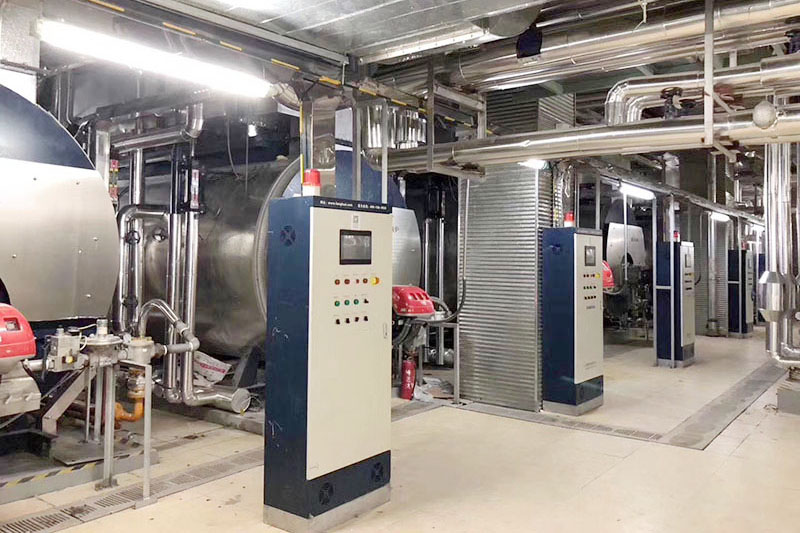
Industrial gas boilers provide consistent steam production under variable loads. Their advanced burners and control systems allow rapid response to changes in steam demand, critical in food processing, textile, chimique, and pharmaceutical industries. Unlike biomass boilers, gas boilers maintain high efficiency across a wide operating range, reducing energy waste and ensuring stable production.
3. Gas Boiler vs Biomass Boiler Comparison
| Aspect | Chaudière à Gaz | Chaudière à biomasse |
|---|---|---|
| Fuel Efficiency | 88% – 95% | 75% – 88% |
| Manipulation du carburant | Minimal | Haut (feeding + enlèvement des cendres) |
| Entretien | Faible | Haut |
| Automation | Haut (PLC/remote) | Moyen |
| Complexité de l'installation | Modéré | Haut (stockage + convoyeurs + ash) |
| Operating Cost Predictability | Haut | Variable |
| Environmental Impact | Moderate CO₂, low particulates | Carbon-neutral if sourced sustainably, but ash & particulate emissions |
4. Maintenance and Operational Considerations
- Routine inspection and cleaning of heat exchangers
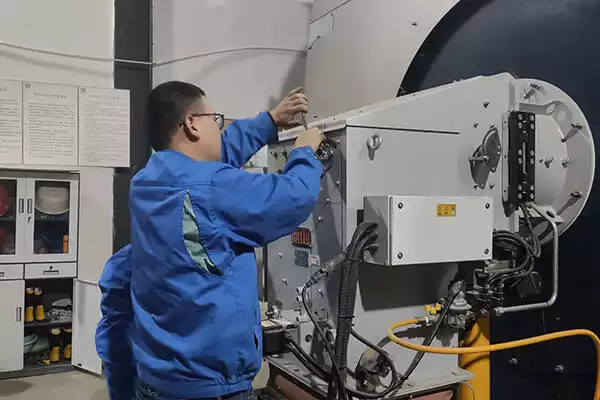
- Periodic safety checks on burners and control systems
- No ash handling or fuel feeding systems required
- Less downtime and labor compared to biomasse or coal systems
5. Installation Requirements
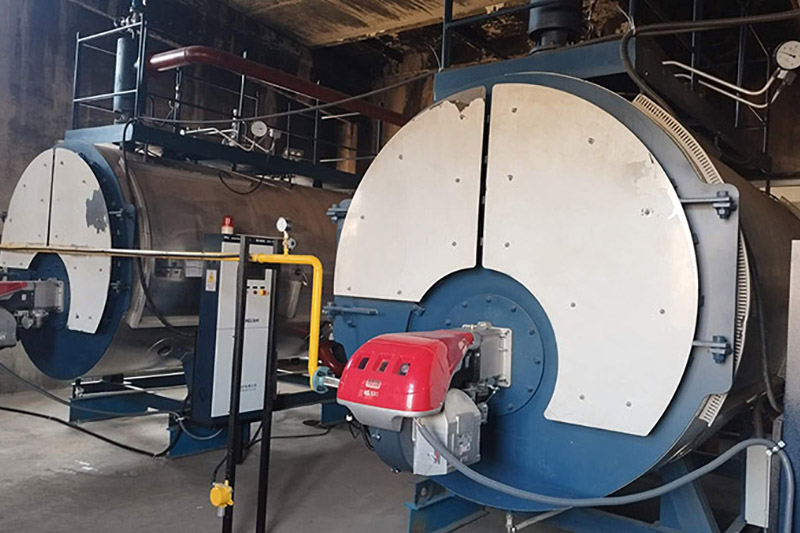
Installing a gas boiler involves proper boiler room preparation, gas supply connection, venting or chimney, traitement de l'eau, and steam piping. Modern gas boilers can integrate with automation systems for optimized efficiency and remote monitoring. Typical installation cost ranges:
| Capacité de la chaudière | Installation Cost Range (USD) | Required Components |
|---|---|---|
| 1–3 Ton | $5,000 – $12,000 | Gas connection, traitement de l'eau, basic piping, cheminée |
| 5–10 Ton | $12,000 – $25,000 | Gas supply, traitement de l'eau, steam piping, cheminée, control panel |
| 15–20 Ton | $25,000 – $50,000 | Full installation with automation, safety devices, gas supply, tuyauterie, cheminée |
6. Applications and Suitability
- Factories requiring continuous steam supply
- Operations with fluctuating load demands
- Automated production lines with minimal manual supervision
- Facilities prioritizing low maintenance and high efficiency
- Industries needing compliance with environmental regulations
7. Environmental Considerations
Gas boilers produce lower particulate and sulfur emissions than coal or biomass boilers. Predictable CO₂ emissions and cleaner combustion make them easier to comply with environmental regulations, which can simplify permitting and reduce operational risk.
8. Total Cost of Ownership
When choosing the best gas boiler, consider the total cost of ownership (TCO), y compris:
- Investissement initial (boiler unit, installation, gas connection, cheminée)
- Fuel costs (based on steam demand and operating hours)
- Maintenance and labor
- Downtime risk
- Emission compliance

Gas boilers often provide lower TCO than biomass boilers due to higher efficiency, lower maintenance, and simpler operation.
If you would like to learn more about the detail of gas boilers, please contact me. I can provide a customized plan and send you a free quote. WhatsApp: +86 138 3822 5665
Foire aux questions
Why are gas boilers preferred in industrial steam production?
Gas boilers offer high efficiency, reliable steam output, peu d'entretien, and easy integration with automation systems.
Do gas boilers have lower operating costs than biomass boilers?
Oui, when factoring efficiency, entretien, et du travail. Biomass may have cheaper nominal fuel costs, but additional handling and maintenance reduce the advantage.
Are gas boilers environmentally friendly?
Oui. Gas boilers emit lower particulates and predictable CO₂ levels, helping facilities comply with environmental regulations.
What factors determine the best gas boiler for my factory?
Steam demand, heures d'ouverture, fuel cost, space, automation, and emission requirements. A lifecycle cost analysis ensures the optimal choice.
Can gas boilers handle large industrial loads?
Modern industrial gas boilers can handle high capacities while maintaining stable steam supply and efficiency.

