
For any factory operating an industrial steam boiler, fuel consumption is one of the most important factors affecting production costs. Whether the boiler uses natural gas, diesel, biomass, or coal, understanding how to calculate fuel consumption helps companies estimate operating expenses, compare different fuel options, and select the most economical boiler system.
Many boiler buyers ask questions such as:
- How much fuel does a steam boiler consume per hour?
- How much does it cost to produce one ton of steam?
- How can I estimate annual boiler fuel costs?
The answer depends on several factors, including boiler capacity, steam pressure, fuel calorific value, boiler efficiency, and operating conditions.
This guide explains the industrial steam boiler fuel consumption calculation formula, provides calculation examples, and explains how to reduce fuel costs through improved boiler efficiency and energy-saving technologies.
What Is Industrial Steam Boiler Fuel Consumption?
Industrial steam boiler fuel consumption refers to the amount of fuel required by a boiler to generate a specific amount of steam.
The fuel can be:
- Natural gas
- Diesel oil
- Heavy oil
- Biomass pellets
- Wood chips
- Rice husk
- Coal
Fuel consumption is usually measured as:
- Nm³/h for natural gas
- kg/h for diesel or oil
- kg/h or ton/h for biomass and coal
For example:
A 6 ton gas steam boiler may consume hundreds of cubic meters of natural gas per hour depending on its efficiency and operating load.
However, the actual consumption is not determined only by boiler capacity. Two boilers with the same steam output may have different fuel consumption due to differences in design, efficiency, and operating conditions.
Industrial Steam Boiler Fuel Consumption Formula
The basic principle of fuel consumption calculation is:
Energy Required for Steam Production ÷ Energy Provided by Fuel = Fuel Consumption
The general formula is:
Fuel Consumption = Steam Production × Heat Required per kg Steam ÷ (Fuel Calorific Value × Boiler Efficiency)
Where:
- Steam Production = kg/h
- Heat Required = energy required to produce steam
- Fuel Calorific Value = energy contained in the fuel
- Boiler Efficiency = percentage of fuel energy converted into useful heat
How to Calculate Natural Gas Consumption of a Steam Boiler?
Natural gas boilers are widely used in food processing, textile factories, pharmaceutical plants, chemical industries, and other manufacturing facilities.
The calculation example:
Example:
A factory uses a:
- 5 ton/hour gas steam boiler
- Steam pressure: 10 bar
- Boiler efficiency: 95%
- Natural gas calorific value: 8,500 kcal/Nm³
The approximate energy required to produce steam is calculated based on steam enthalpy.
Assuming:
- Steam output: 5,000 kg/h
- Required heat: approximately 660 kcal/kg steam
Total heat required:
5,000 × 660 = 3,300,000 kcal/h
Considering boiler efficiency:
3,300,000 ÷ 95% = 3,473,684 kcal/h
Natural gas consumption:
3,473,684 ÷ 8,500 ≈ 409 Nm³/h
Therefore:
A 5 ton gas steam boiler consumes approximately:
400–420 Nm³ of natural gas per hour
under normal operating conditions.
Actual consumption may vary depending on load percentage, steam pressure, and boiler condition.
Unsure about your boiler fuel consumption?
Dabonn Energy provides free calculation and customized steam boiler solutions.. Our expert engineering team provides full support from design to installation.
Fuel Consumption Calculation for Different Boiler Fuels
Different fuels have different calorific values, so the consumption rate varies.
| Fuel Type | Typical Calorific Value | Consumption Unit |
|---|---|---|
| Natural Gas | 8,000–9,000 kcal/Nm³ | Nm³/h |
| Diesel Oil | 10,000–10,500 kcal/kg | kg/h |
| Heavy Oil | 9,500–10,000 kcal/kg | kg/h |
| Biomass Pellet | 3,500–4,500 kcal/kg | kg/h |
| Coal | 4,000–7,000 kcal/kg | kg/h |
For example:
A biomass boiler usually consumes more fuel by weight compared with a gas boiler because biomass has a lower calorific value.
However, biomass fuel can still offer lower operating costs because the fuel price is often much cheaper.
Factors Affecting Industrial Boiler Fuel Consumption
The theoretical calculation provides an estimate, but real operating conditions can significantly affect fuel usage.
1. Boiler Efficiency
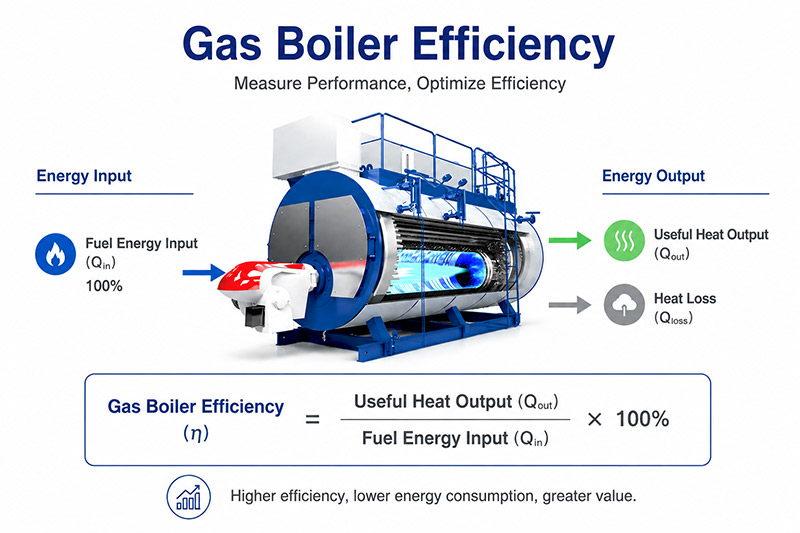
Boiler efficiency is one of the biggest factors.
A boiler with:
- 85% efficiency
will consume more fuel than:
- 95% efficiency
to produce the same amount of steam.
Modern condensing gas boilers and boilers equipped with economizers can significantly improve efficiency.
2. Steam Pressure
Higher steam pressure requires more energy.
For example:
Producing steam at 16 bar requires more fuel than producing steam at 7 bar because the steam enthalpy is higher.
3. Feed Water Temperature
Cold feed water increases fuel consumption.
Installing:
- Boiler economizer
- Feed water heater
- Condensate recovery system
can reduce energy requirements by preheating water before entering the boiler.
4. Boiler Load Rate
A boiler operating at 100% load usually has higher efficiency than one operating at very low load.
Frequent start-stop operation also increases fuel consumption.
5. Fuel Quality
Fuel quality directly affects combustion efficiency.
For biomass boilers, moisture content is especially important.
Higher moisture means:
- Lower heating value
- More fuel consumption
- More ash production
How to Calculate Industrial Boiler Fuel Cost?
After calculating fuel consumption, you can estimate the operating cost.
Formula:
Fuel Cost per Hour = Fuel Consumption per Hour × Fuel Price
Example:
A gas steam boiler consumes:
- 400 Nm³/h
Natural gas price:
- $0.50/Nm³
Hourly fuel cost:
400 × 0.50 = $200/hour
Daily cost:
Assuming 16 operating hours:
200 × 16 = $3,200/day
Monthly cost:
3,200 × 26 working days = $83,200/month
This calculation helps factories evaluate boiler operating expenses before investment.
How to Reduce Industrial Steam Boiler Fuel Consumption?
Reducing fuel consumption does not always require replacing the entire boiler system. Many energy-saving improvements can significantly reduce operating costs.
1. Improve Boiler Efficiency
Regular maintenance helps maintain combustion efficiency.
Important measures include:
- Burner adjustment
- Cleaning heat transfer surfaces
- Proper air-fuel ratio control
2. Install a Boiler Economizer
A boiler economizer recovers heat from exhaust gases and uses it to preheat boiler feed water.
Benefits:
- Lower fuel consumption
- Higher thermal efficiency
- Reduced exhaust temperature
Depending on the system design, an economizer can improve efficiency by approximately 3–8%.
3. Use a Condensing Gas Boiler
A condensing gas boiler can recover additional heat from water vapor in exhaust gases.
Compared with traditional boilers, it can achieve higher efficiency under suitable operating conditions.
4. Recover Condensate
Returning hot condensate back to the boiler reduces the energy required for water heating.
This is especially valuable for factories with continuous steam demand.
How Does Dabonn Energy Help Reduce Boiler Fuel Costs?
Dabonn Energy provides complete industrial boiler solutions designed for efficiency and long-term operating savings.
Our solutions include:
- Industrial steam boilers
- Gas-fired boilers
- Biomass boilers
- Oil-fired boilers
- Boiler economizers
- Feed water pumps
- Water treatment systems
- Complete steam systems
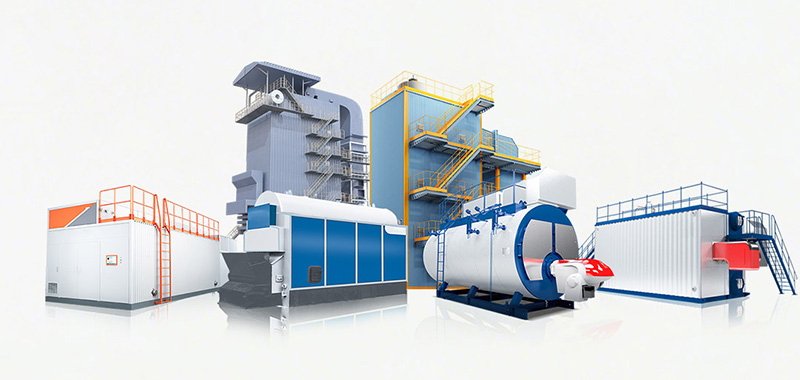
Instead of only supplying a boiler, Dabonn Energy analyzes the customer’s steam requirements, fuel availability, operating conditions, and energy-saving opportunities to design the most suitable boiler system.
Through optimized boiler selection and energy-saving equipment, factories can reduce fuel consumption while maintaining stable steam production.
Conclusion
Calculating industrial steam boiler fuel consumption is essential for understanding operating costs and selecting the right boiler system.
The actual fuel consumption depends on:
- Boiler capacity
- Fuel type
- Boiler efficiency
- Steam pressure
- Feed water temperature
- Operating conditions
By using the correct calculation method and improving system efficiency through technologies such as economizers, condensing boilers, and condensate recovery systems, factories can significantly reduce fuel costs and improve overall energy efficiency.
For companies planning a new boiler project or upgrading an existing system, accurate fuel consumption calculation is the first step toward achieving a more economical and sustainable steam production system.
Frequently Asked Questions
How much fuel does a 1 ton steam boiler consume?
A 1 ton gas steam boiler typically consumes around 70–75 Nm³ of natural gas per hour, depending on boiler efficiency, steam pressure, and operating load.
What is the formula for calculating boiler fuel consumption?
The basic formula is:
Fuel Consumption = Steam Output × Required Heat ÷ (Fuel Calorific Value × Boiler Efficiency)
Does a higher efficiency boiler use less fuel?
Yes. A higher efficiency boiler converts more fuel energy into useful steam, reducing fuel consumption and operating costs.
How can I reduce steam boiler fuel consumption?
Common methods include improving combustion control, installing an economizer, recovering condensate, improving insulation, and selecting a high-efficiency boiler.
Which fuel is cheapest for industrial steam boilers?
The cheapest fuel depends on local energy prices. Biomass can be economical where fuel resources are available, while natural gas boilers usually provide higher efficiency and cleaner operation.


