
A condensing gas boiler is an advanced high-efficiency heating system that recovers additional heat from exhaust gases by condensing water vapor produced during natural gas combustion. Unlike traditional gas boilers that release hot flue gases directly into the atmosphere, condensing gas boilers capture and reuse this hidden heat energy to improve overall efficiency.
With increasing energy costs and stricter emission requirements, condensing gas boiler technology has become one of the most important developments in modern industrial heating systems. It is widely used in factories, commercial buildings, district heating systems, food processing plants, textile facilities, and other industries requiring reliable steam or hot water production.
Compared with conventional gas boilers, condensing technology can significantly reduce fuel consumption, lower emissions, and improve long-term operating economics.
What Is a Condensing Gas Boiler?
A condensing gas boiler is a gas-fired boiler equipped with a specially designed heat exchanger that allows the boiler to recover both sensible heat and latent heat from combustion gases.
During natural gas combustion, the main products are:
- Heat energy
- Carbon dioxide (CO₂)
- Water vapor
Traditional boilers only use the heat released from combustion. The remaining heat contained in water vapor is lost through the chimney.
A condensing gas boiler uses advanced heat recovery technology to cool the exhaust gas below its dew point temperature, causing water vapor to condense. During this condensation process, additional heat energy is released and transferred back into the heating system.
This recovered energy improves boiler efficiency and reduces fuel consumption.
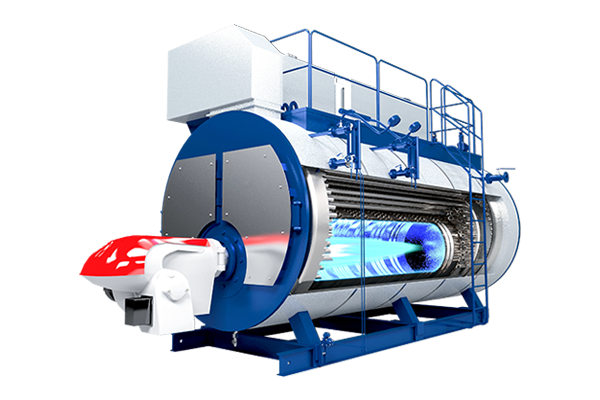
How Does a Condensing Gas Boiler Work?
The working principle of a condensing gas boiler includes four main processes.
1. Gas Combustion
Natural gas is mixed with air inside the burner.
The combustion process produces:
- High-temperature flame
- Hot combustion gases
- Water vapor
The generated heat is transferred to water through the boiler heat exchanger.
2. Primary Heat Transfer
The first heat exchanger absorbs the main combustion heat.
The water temperature increases and is supplied to:
- Steam generation system
- Hot water circulation system
- Industrial heating equipment
At this stage, the process is similar to a traditional gas boiler.
3. Flue Gas Heat Recovery
The difference between a normal gas boiler and a condensing gas boiler occurs after combustion.
In a conventional boiler:
Hot exhaust gas → Chimney → Atmosphere
In a condensing boiler:
Hot exhaust gas → Condensing heat exchanger → Heat recovery → Chimney
The heat exchanger reduces exhaust gas temperature and extracts additional energy.
4. Condensation Heat Recovery
When exhaust gas temperature falls below the dew point (approximately 55°C for natural gas combustion), water vapor changes from gas into liquid.
During this phase, latent heat is released.
The recovered heat is transferred back into the system, increasing total efficiency.
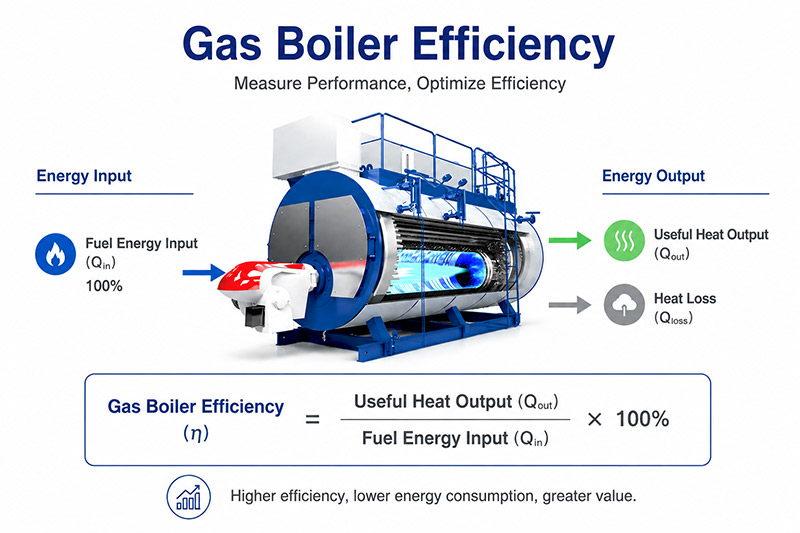
Why Can Condensing Gas Boiler Efficiency Exceed 100%?
One of the most frequently asked questions is:
How can a boiler efficiency exceed 100%?
The answer is related to the heating value calculation method.
Higher Heating Value (HHV)
HHV includes the latent heat contained in water vapor.
Based on HHV:
Maximum efficiency cannot exceed 100%.
Lower Heating Value (LHV)
LHV does not include latent heat recovery.
Most European boiler efficiency ratings use LHV calculations.
Because condensing boilers recover additional latent heat, the calculated efficiency can exceed 100%.
| Boiler Type | Efficiency |
|---|---|
| Traditional Gas Boiler | 85%-92% |
| High Efficiency Gas Boiler | 92%-96% |
| Condensing Gas Boiler | 96%-99% |
| Condensing Boiler (LHV calculation) | 100%+ |
Therefore, “over 100% efficiency” does not mean the boiler creates energy. It means the calculation method excludes recovered condensation heat.
Condensing Gas Boiler vs Traditional Gas Boiler
| Feature | Traditional Gas Boiler | Condensing Gas Boiler |
|---|---|---|
| Heat Recovery | Only combustion heat | Combustion + latent heat |
| Efficiency | 85%-92% | 96%-99% |
| Exhaust Temperature | Higher | Lower |
| Fuel Consumption | Higher | Lower |
| Emission Level | Higher | Lower |
| Initial Cost | Lower | Higher |
| Operating Cost | Higher | Lower |
Although condensing boilers usually have a higher purchase price, the fuel savings can offset the initial investment over time.
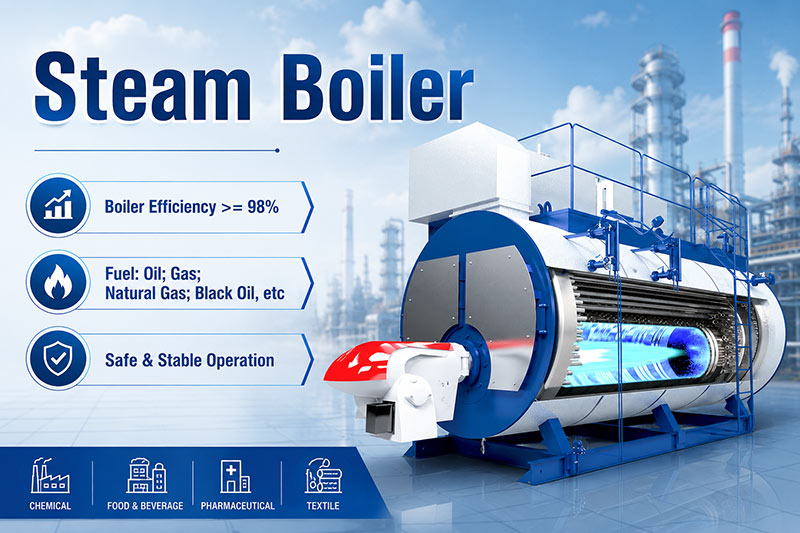
Key Technologies of Condensing Gas Boilers
1. Condensing Heat Exchanger
The heat exchanger is the core component.
It must have:
- High thermal conductivity
- Corrosion resistance
- High temperature durability
Common materials include:
- Stainless steel
- Aluminum alloy
2. High Efficiency Premix Burner
Modern condensing boilers often use premix burners.
Advantages:
- Better air-fuel mixing
- More complete combustion
- Lower NOx emissions
- Stable flame control
3. Intelligent Combustion Control
Advanced control systems automatically adjust:
- Gas supply
- Air ratio
- Burner output
- Water temperature
4. Economizer Technology
Some industrial condensing systems combine:
- Condensing heat exchanger
- Economizer
to recover even more waste heat.
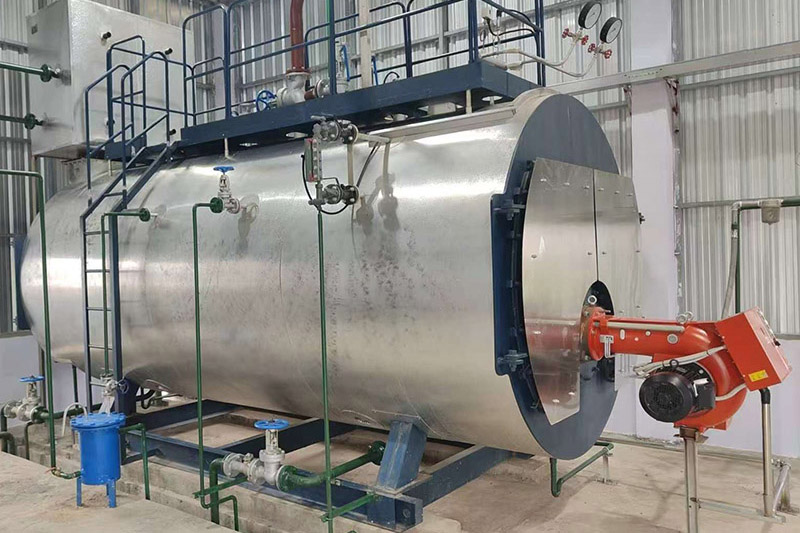
Industrial Applications of Condensing Gas Boilers
Food Processing Industry
Applications:
- Steam production
- Cleaning processes
- Cooking
- Sterilization
Textile Industry
Used for:
- Dyeing
- Drying
- Finishing processes
Chemical Industry
Used for:
- Process heating
- Temperature control
- Reaction processes
Commercial Heating
Applications:
- Hotels
- Hospitals
- Office buildings
- District heating
Factors Affecting Condensing Gas Boiler Efficiency
1. Return Water Temperature
Lower return water temperature improves condensation.
2. Boiler Load
Boilers operating at partial load often achieve better condensation performance.
3. System Design
Proper design of:
- Boiler Water Pumps
- Boiler Threaded Pipe
- Heat exchangers
affects overall efficiency.
4. Maintenance
Regular maintenance ensures:
- Clean heat exchanger
- Stable combustion
- Maximum efficiency
Condensing Gas Boiler Cost
The price depends on:
- Boiler capacity
- Pressure
- Automation level
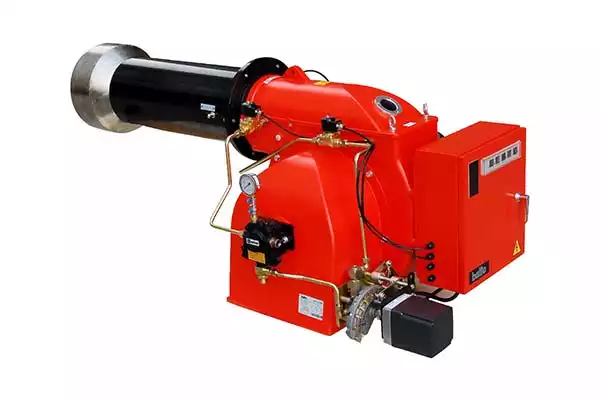
- Boiler Burner brand
- Heat exchanger material
- Auxiliary equipment
| Item | Cost Impact |
|---|---|
| Boiler Capacity | Higher capacity increases cost |
| Stainless Heat Exchanger | Higher durability |
| Advanced Control System | Improves efficiency |
| Installation | Depends on project complexity |
Although the initial investment is higher than conventional boilers, fuel savings can provide long-term economic benefits.
Looking for a High-efficiency Gas Steam Boiler?
Contact us today for a customized High-efficiency gas steam boiler solution and free energy efficiency assessment. Our expert engineering team provides full support from design to installation.
Dabonn Energy Condensing Gas Boiler Solutions
Dabonn Energy specializes in industrial boiler systems and energy solutions, providing high-efficiency gas-fired boiler systems for global customers.
The company provides:
- Gas steam boilers
- Condensing gas boiler systems
- Oil steam boiler
- Biomass steam boiler
- Boiler auxiliary equipment
- Complete energy system design
Dabonn Energy focuses not only on boiler supply but also on improving the total lifecycle performance of industrial heating systems.
Through optimized design, advanced combustion technology, and efficient heat recovery systems, customers can achieve:
- Lower fuel consumption
- Reduced emissions
- Improved operational stability
- Lower long-term energy costs
How to Choose the Right Condensing Gas Boiler?
1. Required Capacity
Calculate:
- Steam demand
- Heating load
- Operating hours
2. Fuel Availability
Check:
- Natural gas supply
- Gas pressure
- Local fuel cost
3. Operating Conditions
Consider:
- Working pressure
- Water temperature
- Production requirements
4. Total Lifecycle Cost
Do not only compare purchase prices.
Evaluate:
- Fuel savings
- Maintenance cost
- Equipment lifespan
Conclusion
A condensing gas boiler represents the future direction of high-efficiency industrial heating technology. By recovering latent heat from exhaust gases, it achieves significantly higher efficiency than traditional gas boilers while reducing fuel consumption and emissions.
For factories looking to reduce operating costs and improve energy efficiency, condensing gas boiler technology provides a reliable and sustainable solution.
With professional engineering support from companies like Dabonn Energy, industries can select the right boiler system based on capacity requirements, fuel conditions, and long-term economic goals.
FAQ
What is a condensing gas boiler?
A condensing gas boiler is a high-efficiency gas boiler that recovers heat from exhaust gas condensation to improve energy utilization.
Can a condensing gas boiler reach over 100% efficiency?
Yes. When calculated using the Lower Heating Value (LHV) method, condensing boilers can exceed 100% efficiency because they recover latent heat from water vapor.
How much more efficient is a condensing gas boiler?
A condensing gas boiler can achieve approximately 96%-99% efficiency compared with 85%-92% for traditional gas boilers.
Is a condensing gas boiler worth the investment?
Yes. Although the initial cost is higher, fuel savings and lower operating costs often provide a faster return on investment.
What industries use condensing gas boilers?
They are commonly used in food processing, textile, chemical, pharmaceutical, commercial heating, and manufacturing industries.
What is the main advantage of a condensing gas boiler?
The main advantage is recovering additional heat from exhaust gases, reducing fuel consumption and improving overall system efficiency.


