
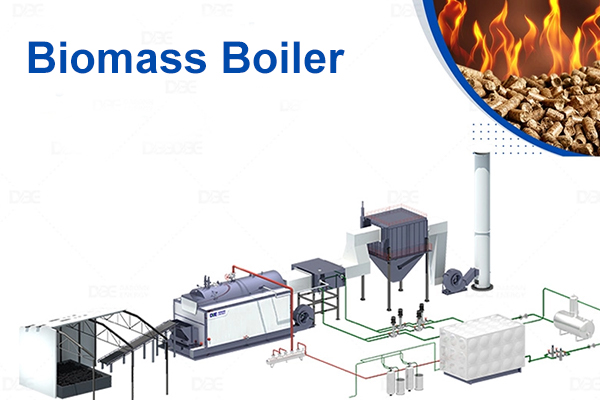
In den meisten industriellen Anwendungen, A Gaskessel is cheaper to run than a Biomassekessel when total operating cost, Arbeit, Wartung, and system complexity are considered. While biomass fuel may have a lower price per ton in some regions, the overall cost of handling, Lagerung, cleaning, and lower efficiency often reduces the financial advantage.
Jedoch, the answer depends heavily on fuel pricing, Betriebsstunden, local labor cost, and emission regulations. Below is a practical industrial comparison.
1. Fuel Cost Comparison
Let’s compare a 5 ton industrial boiler operating 6,000 Stunden pro Jahr.
| Category | Gaskessel | Biomassekessel |
|---|---|---|
| Fuel Price Assumption | $0.35 pro Nm³ | $120 per ton (wood pellets) |
| Hourly Consumption | 350–400 Nm³ | 450–550 kg |
| Stündliche Kraftstoffkosten | $122 – $140 | $54 – $66 |
At first glance, biomass appears cheaper in hourly fuel cost. Jedoch, this does not reflect the full operating cost.
2. Efficiency Difference
| Kesseltyp | Typical Thermal Efficiency |
|---|---|
| Gaskessel | 88% – 95% |
| Biomassekessel | 75% – 88% |
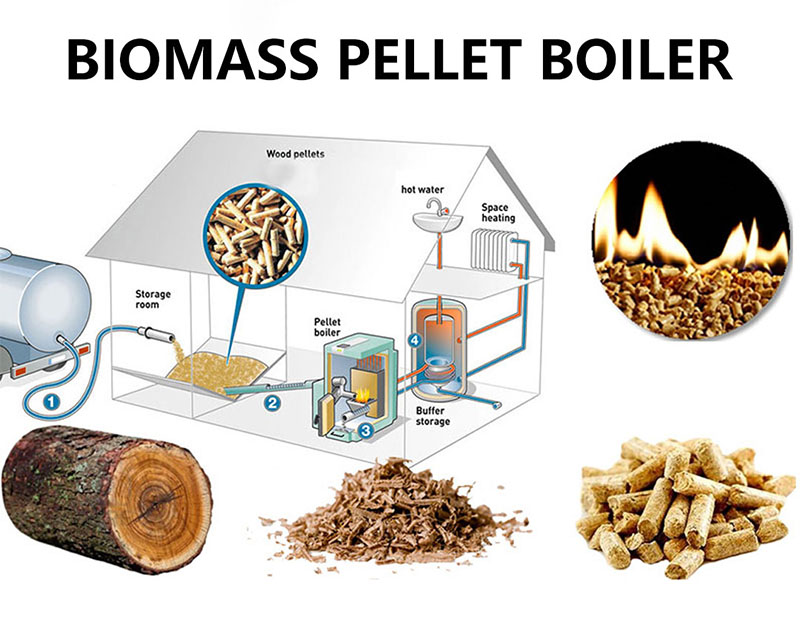
Gas boilers typically operate at higher efficiency and maintain stable combustion under variable load. Biomass systems often experience fluctuation due to fuel moisture content and feeding consistency.
3. Hidden Operating Costs
Biomass boilers require additional operational inputs:
- Fuel storage space and handling systems
- Feeding conveyors or screw systems
- Regular ash removal
- Higher maintenance frequency
- Additional labor cost
Gaskessel, in contrast, require no on-site fuel storage and minimal daily manual intervention.
4. Annual Operating Cost Estimate
Example for 5 ton system (6,000 Stunden/Jahr):
- Gas annual fuel cost: $750,000 – $840,000
- Biomass annual fuel cost: $324,000 – $396,000
Jedoch, when adding labor, Wartung, downtime, and cleaning costs, biomass operational overhead may add $80,000 – $150,000 per year depending on plant conditions.
The true savings gap narrows significantly.
5. Installation and Capital Cost Difference
Biomass systems typically require:
- Larger boiler footprint
- Fuel storage silos
- Emission control systems
- Ash handling equipment
Initial investment for biomass boilers is often 20% – 40% higher than gas systems of similar capacity.
When Biomass May Be Cheaper
- Very low local biomass fuel prices
- Access to free agricultural waste
- Government subsidies or carbon incentives
- High natural gas prices
When Gas Is Typically More Cost-Effective
- Stable gas supply available
- High annual operating hours
- Limited labor availability
- Space constraints
- Need for stable steam pressure
Final Verdict
While biomass fuel may appear cheaper on a pure fuel-price basis, gas boilers often provide lower total operating cost, higher efficiency, cleaner combustion, and simpler plant management. For most medium to large industrial facilities, gas boilers offer better long-term economic stability unless biomass fuel is significantly subsidized or locally abundant.
Before making a decision, facilities should evaluate total lifecycle cost rather than fuel price alone.

If you would like to learn more about the detailed price differences between biomass boilers and gas boilers, Bitte Kontaktieren Sie mich. Ich kann einen maßgeschneiderten Plan erstellen und Ihnen ein kostenloses Angebot senden. WhatsApp: +86 138 3822 5665
Häufig gestellte Fragen
Is biomass always cheaper than gas?
No. Biomass fuel may cost less per ton in some regions, but total operating cost depends on fuel moisture, Arbeit, Lagerung, Wartung, and efficiency. Gas systems often provide more predictable long-term cost stability.
Which boiler has lower maintenance cost?
Gas boilers generally require less daily maintenance. Biomass systems need regular ash removal, feeding system inspection, and cleaning due to solid fuel residue.
Does biomass require more space?
Ja. Biomass boilers require fuel storage silos, feeding conveyors, and ash handling systems, which increase the required plant footprint compared to gas boilers.
Is biomass more environmentally friendly than gas?
Biomass is often considered carbon-neutral when sourced sustainably. Jedoch, combustion efficiency and emission control systems significantly affect actual environmental performance.
How do I calculate which boiler is cheaper for my factory?
You need to evaluate annual steam demand, Betriebsstunden, local fuel price, labor cost, and emission regulations. A full lifecycle cost comparison provides the most accurate answer.

