
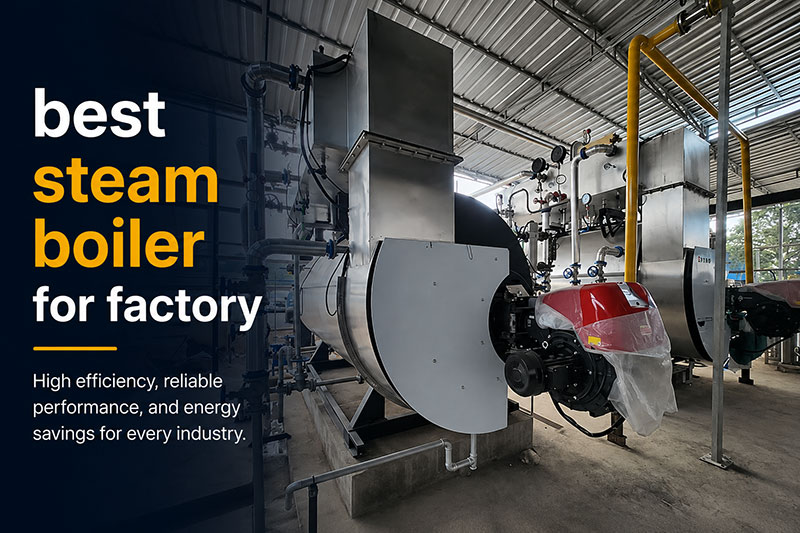
Le choix de la chaudière à vapeur adaptée à votre usine dépend de plusieurs facteurs importants, notamment du type d'industrie., demande de vapeur, disponibilité du carburant, coût d'exploitation, et expansion future de la production. Pour la plupart des usines modernes, les chaudières à vapeur au gaz sont considérées comme le meilleur équilibre entre efficacité, coût d'exploitation, et performances environnementales. Cependant, usines alimentaires, usines textiles, installations chimiques, et les hôpitaux peuvent nécessiter différentes configurations de chaudières en fonction de leurs processus de production.
Les chaudières à vapeur industrielles sont largement utilisées pour le chauffage, stérilisation, séchage, cuisson, nettoyage, et production d'électricité. Choisir la mauvaise chaudière peut augmenter la consommation de carburant, réduire l'efficacité de la production, et créer des coûts de maintenance inutiles. En revanche, un système de chaudière à vapeur correctement conçu peut améliorer considérablement l'efficacité énergétique et la stabilité de fonctionnement à long terme.
Pourquoi choisir la bonne chaudière à vapeur est important
Une chaudière à vapeur est l'un des systèmes énergétiques les plus importants dans une usine. Dans des secteurs tels que la fabrication textile, transformation des aliments, médicaments, et production chimique, la vapeur affecte directement la qualité du produit et l’efficacité de la production.
- La vapeur stable améliore la cohérence de la fabrication
- Des chaudières efficaces réduisent la consommation de carburant
- Les systèmes automatiques réduisent les besoins en main-d'œuvre
- Un dimensionnement approprié évite le gaspillage d’énergie
- Des chaudières fiables réduisent les temps d'arrêt
De nombreuses usines se concentrent uniquement sur le prix d'achat de la chaudière, mais les coûts d'exploitation et le rendement énergétique sont souvent plus importants à long terme.
Étape 1: Choisissez la bonne capacité de chaudière
La première étape consiste à déterminer la quantité de vapeur dont votre usine a réellement besoin.. La capacité de la chaudière est généralement mesurée en tonnes de vapeur par heure.
| Taille d'usine | Capacité recommandée de la chaudière | Industries typiques |
|---|---|---|
| Petite usine | 1– Chaudière à vapeur de 2 tonnes | Ateliers culinaires, lessive, petites usines textiles |
| Usine moyenne | 4– Chaudière à vapeur de 6 tonnes | Textile, transformation des aliments, usines chimiques |
| Grande usine | 10 Chaudière à vapeur Ton+ | Fabrication industrielle et grandes lignes de production |
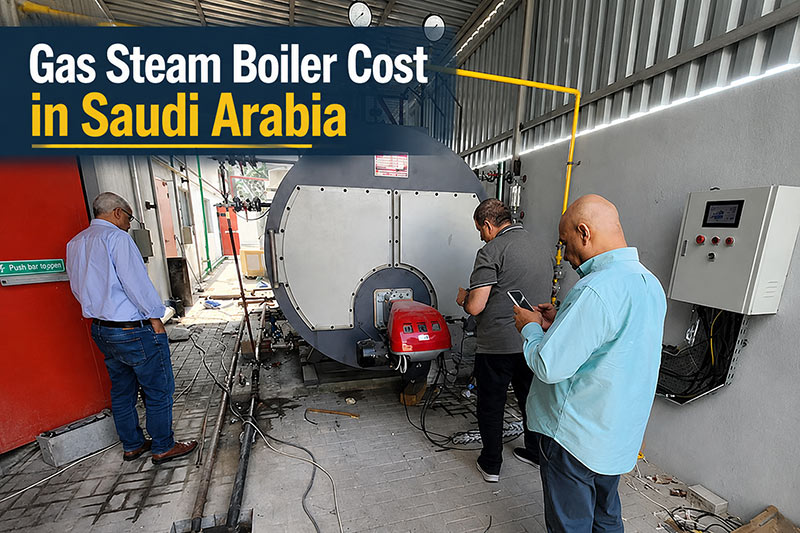
Par exemple, de nombreuses usines recherchant le « prix des chaudières à vapeur à gaz de 2 tonnes » sont généralement des fabricants de produits alimentaires ou textiles de taille moyenne.. Entre-temps, les plus grandes usines en Arabie Saoudite utilisent souvent 6 chaudières à vapeur à gaz d'une tonne pour une production industrielle continue.
Étape 2: Sélectionnez le meilleur type de carburant
Le type de carburant a un impact majeur sur les coûts d’exploitation, complexité de l'installation, et performances environnementales.
| Type de carburant | Principaux avantages | Applications typiques |
|---|---|---|
| Chaudière à vapeur au gaz | Haute efficacité, combustion propre, émissions réduites | Nourriture, textile, industries chimiques |
| Chaudière à vapeur au fioul | Stockage fiable du carburant et combustion stable | Zones industrielles isolées |
| Chaudière à biomasse | Faible coût du carburant et énergie renouvelable | Usines agricoles et rurales |
| Chaudière à vapeur électrique | Zéro émission sur site et installation compacte | Hôpitaux, laboratoires, plantes alimentaires |
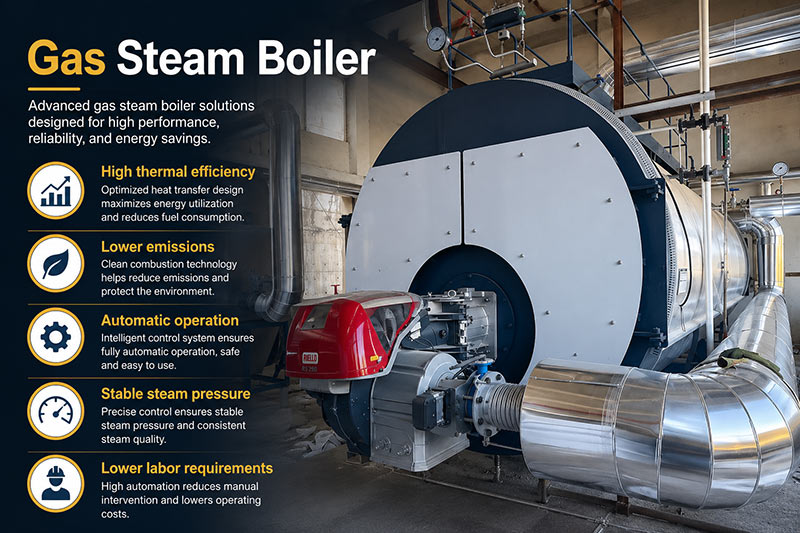
Au cours des dernières années, les chaudières à vapeur au gaz sont devenues de plus en plus populaires car elles offrent des coûts d'exploitation inférieurs et une combustion plus propre par rapport aux systèmes au charbon ou au fioul.
Étape 3: Évaluer le coût de fonctionnement de la chaudière
De nombreux acheteurs se concentrent uniquement sur le prix de l'équipement, mais le coût d'exploitation à long terme est souvent plus important que l'investissement initial.
Le coût d’exploitation des chaudières industrielles comprend principalement:
- Consommation de carburant
- Consommation d'électricité
- Traitement de l'eau
- Coût d'entretien
- Exigences de main d'œuvre
Par exemple, un rendement élevé chaudière à vapeur à gaz peut coûter plus cher au départ mais réduire considérablement la consommation de carburant au fil du temps. Des usines fonctionnant en continu pendant 24 heures par jour peuvent économiser des dépenses de carburant substantielles en choisissant une chaudière à condensation à haut rendement.
De nombreuses usines comparent les coûts d'exploitation des chaudières à gaz, prix d'une chaudière au fioul, et économies de combustible de chaudière à biomasse avant de prendre une décision d'achat.
Étape 4: Adaptez la chaudière à votre secteur d'activité
Différentes industries nécessitent différentes conditions de vapeur et configurations de chaudières.
| Industrie | Type de chaudière recommandé | Principales applications Steam |
|---|---|---|
| Transformation des aliments | Chaudière à vapeur à gaz | Cuisson, stérilisation, nettoyage |
| Industrie textile | Chaudière à gaz ou à biomasse | Teinture, séchage, repassage |
| Industrie pharmaceutique | Chaudière électrique ou à vapeur propre | Stérilisation et production propre |
| Industrie chimique | Chaudière à gaz haute pression | Chauffage de processus |
| Industrie de la blanchisserie | Petite chaudière à vapeur à gaz | Repassage et lavage à la vapeur |
Les usines du Bangladesh utilisent souvent des chaudières à vapeur au gaz pour la production textile en raison d'un approvisionnement stable en combustible et de coûts d'exploitation inférieurs.. Entre-temps, de nombreuses usines alimentaires préfèrent les chaudières à vapeur à gaz entièrement automatiques pour un contrôle stable de la température et une conformité à la sécurité alimentaire.
Exemple de projet réel: Chaudière à vapeur d'usine d'assaisonnement alimentaire
Une usine de fabrication d'assaisonnements alimentaires produisant des bases de fondue et des produits de condiments nécessitait un approvisionnement en vapeur stable pour la cuisson., stérilisation, et procédés de concentration de sauce.
L'usine a installé un 2 chaudière à vapeur au gaz d'une tonne avec un système de contrôle entièrement automatique pour améliorer l'efficacité de la production et réduire la consommation de carburant.
| Élément du projet | Spécification |
|---|---|
| Industrie | Fabrication d'assaisonnements alimentaires |
| Capacité de la chaudière | 2 Chaudière à vapeur à gaz de tonne |
| Principaux produits | Base de fondue et sauces |
| Principales applications | Cuisson, Stérilisation, Nettoyage |
| Pression de vapeur | 1.0 MPa |
Après l'installation, l'usine a atteint des températures de production plus stables tout en réduisant la consommation de carburant par rapport aux systèmes de chaudières plus anciens.
Considérations relatives à l'installation d'une chaudière à vapeur
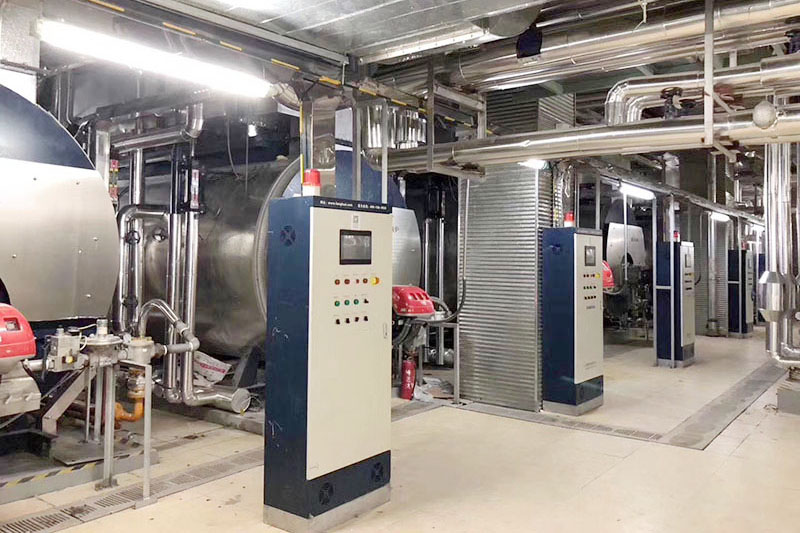
Avant d'acheter une chaudière à vapeur, les usines devraient également évaluer les exigences d'installation.
- Espace chaufferie
- Conditions d'approvisionnement en carburant
- Système de traitement de l'eau
- Disposition du pipeline de vapeur
- Installation de cheminée
- Réglementations environnementales locales
Par exemple, les chaudières à eau chaude au mazout nécessitent des réservoirs de stockage de carburant, tandis que les chaudières électriques à vapeur peuvent nécessiter une capacité électrique élevée.
Pourquoi de nombreuses usines choisissent Dabonn Energy
Dabonn Energy fournit des solutions de chaudières à vapeur industrielles pour les usines de transformation des aliments, usines textiles, installations chimiques, et projets de chauffage commercial. L'entreprise fournit des chaudières à vapeur au gaz, chaudières au fioul, chaudières à biomasse, chaudières à vapeur électriques, et systèmes de chaudières à eau chaude pour les marchés industriels internationaux.
De nombreux projets à l'étranger nécessitent des solutions de vapeur personnalisées basées sur les conditions locales du combustible., taille d'usine, et les exigences opérationnelles. Les acheteurs industriels se concentrent de plus en plus sur l’efficacité des chaudières, coût d'exploitation, et performances de contrôle automatique lors de la sélection d'un fournisseur de chaudière à vapeur.
À la recherche d'une chaudière à vapeur?
Contactez-nous aujourd'hui pour une solution de chaudière à eau chaude au fioul personnalisée et une évaluation gratuite de l'efficacité énergétique. Notre équipe d’ingénieurs experts fournit une assistance complète de la conception à l’installation.
Erreurs courantes lors du choix d'une chaudière à vapeur
- Choisir des chaudières surdimensionnées qui gaspillent du combustible
- Ignorer les coûts d’exploitation à long terme
- Sélection de brûleurs à faible rendement
- Négliger les systèmes de traitement de l’eau
- Se concentrer uniquement sur le prix d'achat initial
Un dimensionnement approprié de la chaudière et une conception professionnelle du système peuvent réduire considérablement les dépenses d'exploitation à long terme..
Conclusion
Choisir la bonne chaudière à vapeur nécessite d'évaluer la demande en vapeur, type de carburant, application industrielle, coût d'exploitation, et conditions de pose. Les chaudières à vapeur au gaz restent l'un des choix les plus populaires pour les usines modernes car elles offrent un rendement élevé., sortie de vapeur stable, et des émissions relativement faibles.
Usines dans des secteurs tels que la transformation des aliments, fabrication de textiles, médicaments, et les produits chimiques nécessitent souvent différentes configurations de chaudières en fonction de leurs processus de production. La sélection du bon système de chaudière peut améliorer l’efficacité énergétique, réduire la consommation de carburant, et soutenir la production industrielle à long terme.
FAQ
De quelle taille de chaudière à vapeur une usine a-t-elle besoin?
Les petites usines utilisent généralement des chaudières à vapeur de 1 à 2 tonnes, les usines de taille moyenne utilisent souvent des systèmes de 4 à 6 tonnes, et les grandes installations industrielles peuvent nécessiter 10 chaudières d'une tonne ou plus en fonction de la demande en vapeur.
Quel type de combustible convient le mieux aux chaudières à vapeur industrielles?
Le gaz naturel est souvent considéré comme la meilleure option car il offre un rendement élevé et une combustion plus propre.. Cependant, les chaudières à biomasse et au fioul peuvent convenir en fonction de la disponibilité locale du combustible.
Combien coûte une chaudière à vapeur industrielle?
Prix des chaudières à vapeur industrielles varient considérablement en fonction de la capacité et de la configuration. Les petits systèmes peuvent coûter environ $20,000, alors que les grandes chaudières industrielles peuvent dépasser $200,000.
Quelles industries utilisent couramment des chaudières à vapeur?
Les chaudières à vapeur sont largement utilisées dans la transformation des aliments, fabrication de textiles, médicaments, production chimique, buanderie, et systèmes de chauffage commerciaux.
Pourquoi l'efficacité de la chaudière est-elle importante?
Un rendement plus élevé de la chaudière réduit la consommation de carburant et les coûts d'exploitation à long terme, en particulier pour les usines fonctionnant en continu tout au long de l'année.


