
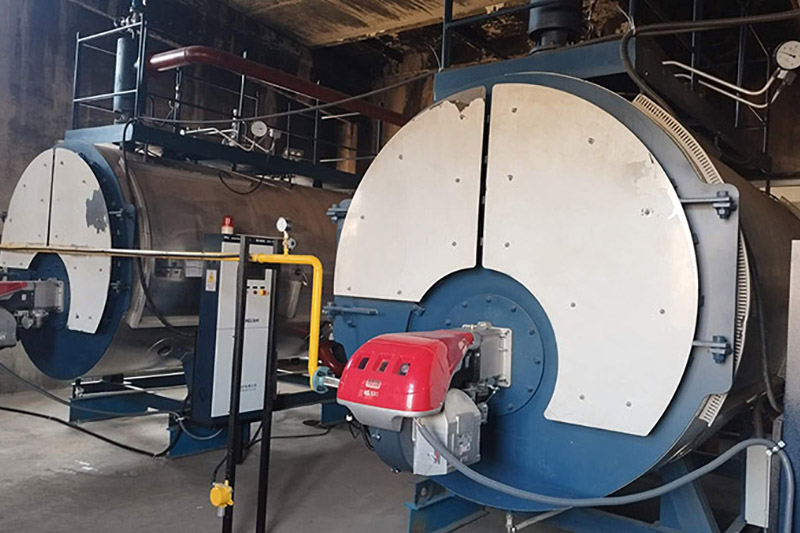
Many boiler buyers are surprised to find that two 1-ton gas steam boilers—with similar specifications and claimed efficiency—can consume significantly different amounts of gas in real operation. In some projects, the difference can reach 10–20%, which directly impacts long-term operating costs.
This article explains the real technical reasons behind these fuel consumption gaps and how beginners can avoid costly mistakes during boiler selection.
1. Rated Efficiency vs. Real Operating Efficiency
Most boiler datasheets list a thermal efficiency measured under standard test conditions. However, real industrial environments are far from ideal.
Actual efficiency is affected by:
- Partial-load operation
- Frequent start-stop cycles
- Feedwater temperature
- Site installation quality
As a result, two boilers with the same rated efficiency can perform very differently in daily operation.
2. Heat Transfer Surface Design
One of the most overlooked factors is heat exchange area.
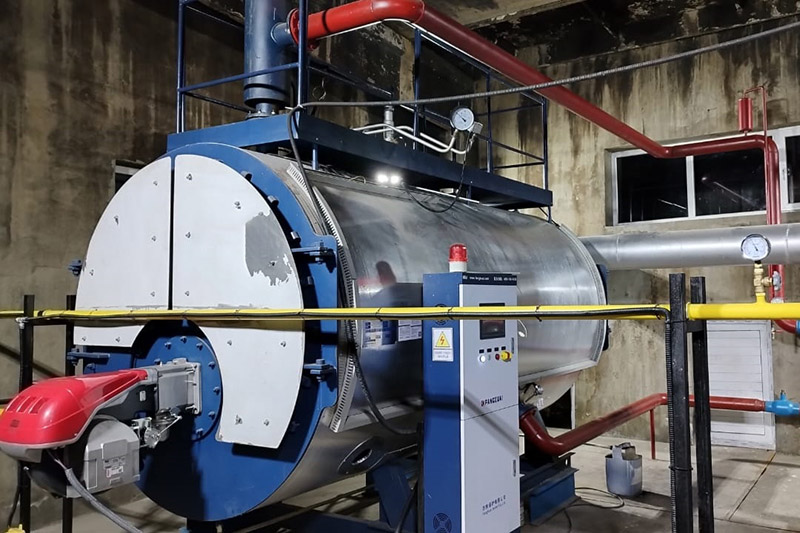
Some manufacturers reduce heat transfer surface to lower production costs. While the boiler may still meet nominal capacity, higher flue gas temperatures lead to increased heat loss.
A well-designed 1-ton gas steam boiler typically has:
- Sufficient convective heat exchange tubes
- Optimized flue gas flow path
- Lower exhaust gas temperature
These differences directly translate into fuel savings.
3. Burner–Boiler Matching Quality
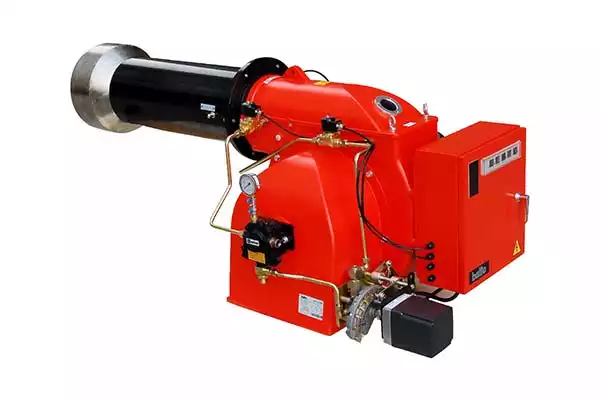
The burner is not a standalone component. Poor matching between the burner and boiler body can result in:
- Incomplete combustion
- Excess air ratios that are too high
- Unstable flame during low-load operation
Even high-end burners can waste fuel if they are not properly matched and tuned for the boiler furnace structure.
4. Excess Air Ratio and Combustion Control
To ensure safe combustion, boilers require excess air. However, too much excess air means:
- Higher flue gas volume
- Increased heat loss through the chimney
- Lower overall thermal efficiency
Advanced combustion control systems help maintain the optimal air–fuel ratio, but only when correctly commissioned.
5. Feedwater Temperature and System Design
Fuel consumption is not determined by the boiler alone. System design plays a critical role.
Lower feedwater temperature means the boiler must supply more heat to produce the same amount of steam.
Key system factors include:
- Condensate recovery rate
- Deaerator performance
- Insulation quality of steam pipelines
6. Operating Load Stability
Industrial boilers operate most efficiently near their design load.
When steam demand fluctuates frequently, the boiler may:
- Operate under partial load
- Cycle on and off repeatedly
- Consume extra fuel during startup phases
This is why two identical boilers can show different gas consumption in different factories.
7. How Much Fuel Consumption Difference Is Normal?
In real industrial projects:
- 5–8% difference is common between average systems
- 10–15% difference usually indicates design or tuning issues
- 20%+ difference often signals poor boiler or system selection
8. How to Reduce Fuel Consumption When Choosing a Boiler
Beginners can reduce long-term gas costs by focusing on:
- Verified real-operation efficiency, not just nameplate data
- Proper burner and boiler matching
- Reasonable boiler sizing (avoid severe oversizing)
- Complete system design, not boiler-only evaluation
Frequently Asked Questions
How much gas does a 1-ton gas steam boiler consume per hour?
Under normal conditions, gas consumption typically ranges from 70–80 Nm³/h, depending on efficiency, feedwater temperature, and operating pressure.
Does a higher-priced boiler always mean lower fuel consumption?
Not always. Design quality, system integration, and commissioning quality matter more than price alone.
Can poor installation increase fuel consumption?
Yes. Improper flue design, air leakage, and poor insulation can significantly increase energy loss.

Conclusion
The fuel consumption difference between two 1-ton gas steam boilers is rarely caused by a single factor. It is usually the combined result of boiler design, burner matching, system configuration, and operating conditions.
Understanding these factors before purchasing helps avoid long-term cost traps and ensures stable, efficient steam production.

