
Boiler capacity calculation is a fundamental step in industrial boiler selection. Whether the boiler is used for steam generation, hot water supply, thermal oil heating, or power generation, an incorrect capacity calculation often leads to energy waste, unstable operation, or long-term economic losses.
In practice, boiler capacity calculation is not limited to a single formula. Different boiler types require different calculation methods based on working medium, operating temperature, pressure, and application scenarios. This article explains multiple boiler capacity calculation methods covering the most common industrial boiler types.
1. Steam Boiler Capacity Calculation (Mass-Based Method)
Steam boilers are usually rated by steam output per hour, expressed in kg/h or tons per hour (TPH). This is the most widely used calculation method in industrial projects.
1.1 Calculation Based on Steam Consumption
The basic idea is to determine how much steam the process consumes during peak operation. Typical steam users include heat exchangers, dryers, sterilization systems, and turbines.
Formula:
Required boiler capacity = Total steam demand × Safety factor
Example:
Process steam demand: 6,500 kg/h
Safety factor: 1.1–1.2
6,500 × 1.15 = 7,475 kg/h
In this case, an 8 TPH steam boiler would be an appropriate selection.
1.2 Steam Boiler Capacity Calculation Using Enthalpy Difference
For more precise projects, especially in chemical plants or power-related applications, steam enthalpy is considered.
Formula:
Boiler capacity = Heat demand / (Steam enthalpy − Feedwater enthalpy)
This method is often used when high-pressure steam is required, feedwater temperature is elevated, or energy balance accuracy is critical.
2. Hot Water Boiler Capacity Calculation (Heat Load Method)
Hot water boilers are commonly used in district heating, industrial washing, and process heating systems. Capacity is usually expressed in kW or MW.
2.1 Calculation Based on Flow Rate and Temperature Difference
Formula:
Q = m × c × ΔT
Where Q is heat load, m is water flow rate, c is the specific heat of water (≈1 kcal/kg·°C), and ΔT is the temperature difference.
Example:
Flow rate: 30,000 kg/h
Temperature difference: 25°C
30,000 × 1 × 25 = 750,000 kcal/h
After considering heat loss and operating margin, a boiler rated at 0.9–1.0 MW would be selected.
2.2 Hot Water Boiler Calculation Based on Heated Area
In heating projects, boiler capacity is sometimes estimated based on building area.
Boiler capacity = Heating area × Heat index
Typical heat index values:
Mild climate: 50–70 W/m²
Cold climate: 80–120 W/m²
This method is suitable for preliminary estimation but should not replace detailed heat load calculation.
3. Thermal Oil Boiler Capacity Calculation
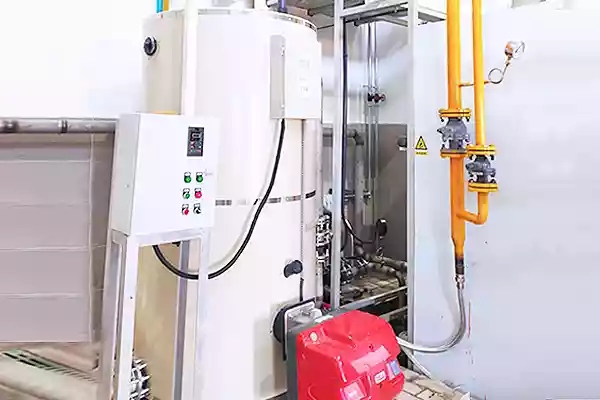
Thermal oil boilers operate at high temperatures without high pressure and are widely used in chemical, textile, and wood processing industries.
3.1 Calculation Based on Oil Flow and Temperature Rise
Formula:
Q = m × c × ΔT
Where the specific heat of thermal oil is typically between 0.45–0.6 kcal/kg·°C.
Example:
Oil flow rate: 18,000 kg/h
Temperature rise: 80°C
Specific heat: 0.5 kcal/kg·°C
18,000 × 0.5 × 80 = 720,000 kcal/h
Thermal oil systems usually require higher safety margins due to system inertia and heat loss.
4. Biomass Boiler Capacity Calculation
Biomass boilers require special attention because fuel characteristics directly affect capacity utilization.
4.1 Capacity Adjustment Based on Fuel Properties
Key factors include moisture content, calorific value, and combustion stability. In practice, a biomass boiler may need 10–25% higher nominal capacity compared to a gas boiler serving the same heat demand.
5. Waste Heat Boiler Capacity Calculation
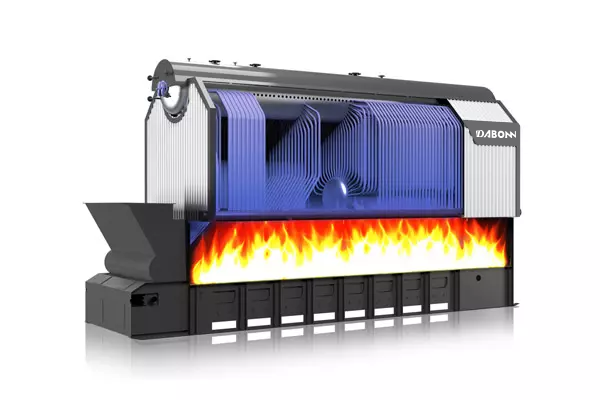
Waste heat boilers recover thermal energy from exhaust gas or industrial processes.
5.1 Calculation Based on Flue Gas Parameters
Simplified formula:
Q = m × c × (T₁ − T₂)
This method is commonly used in power plants, cement factories, and metallurgical industries. Accurate measurement of flue gas conditions is essential for reliable capacity calculation.
6. Common Mistakes in Boiler Capacity Calculation
- Ignoring part-load efficiency
- Using theoretical maximum demand instead of real operation data
- Selecting capacity based only on past projects
- Underestimating future expansion
7. Conclusion
Boiler capacity calculation varies significantly depending on boiler type, application, and operating conditions. Steam boilers, hot water boilers, thermal oil boilers, biomass boilers, and waste heat boilers all require different calculation approaches.
A well-calculated boiler capacity improves energy efficiency, reduces fuel consumption, extends equipment lifespan, and ensures stable operation. Before selecting any industrial boiler, proper capacity calculation should always come first.

