
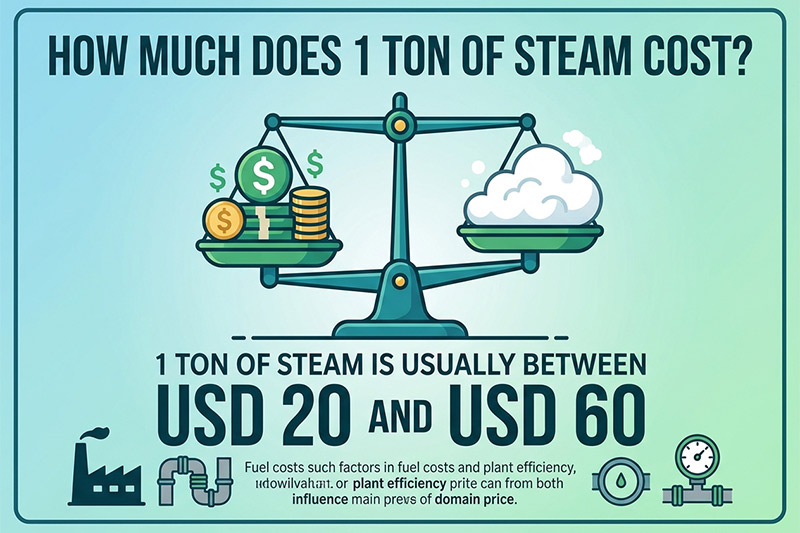
For most industrial factories, the cost of producing 1 ton of steam is usually between USD 20 und USD 60, abhängig von der Kraftstoffart, energy prices, Kesseleffizienz, Dampfdruck, und Betriebsbedingungen.
The largest part of steam production cost normally comes from fuel consumption. Jedoch, a complete steam cost calculation should also include electricity, Wasseraufbereitung, Wartung, and other operating expenses.
Zum Beispiel, a gas-fired steam boiler with 90%+ efficiency may produce steam at a lower total cost than an older boiler with poor combustion efficiency, even if both systems use the same fuel.
Das verstehen cost of steam per ton helps factories:
- Compare different boiler fuels
- Estimate production costs
- Select the right boiler system
- Evaluate energy-saving projects
What Determines the Cost of 1 Ton of Steam?
The cost of steam is not only the price of fuel. It is the total cost required to generate usable steam.
The main cost components include:
| Kostenfaktor | Beschreibung | Impact |
|---|---|---|
| Kraftstoffkosten | Erdgas, Öl, biomass or coal consumption | Highest cost factor |
| Kesseleffizienz | How much fuel energy becomes steam | Directly affects consumption |
| Strom | Fans, pumps and controls | Small but necessary |
| Wasseraufbereitung | Chemical and water preparation | Required for boiler operation |
| Wartung | Reinigung, inspection and replacement parts | Long-term cost |
| Steam losses | Leakage and heat loss | Reduces system efficiency |
In many industrial steam systems, fuel represents the majority of operating costs, which is why improving boiler efficiency is usually the fastest way to reduce steam costs.
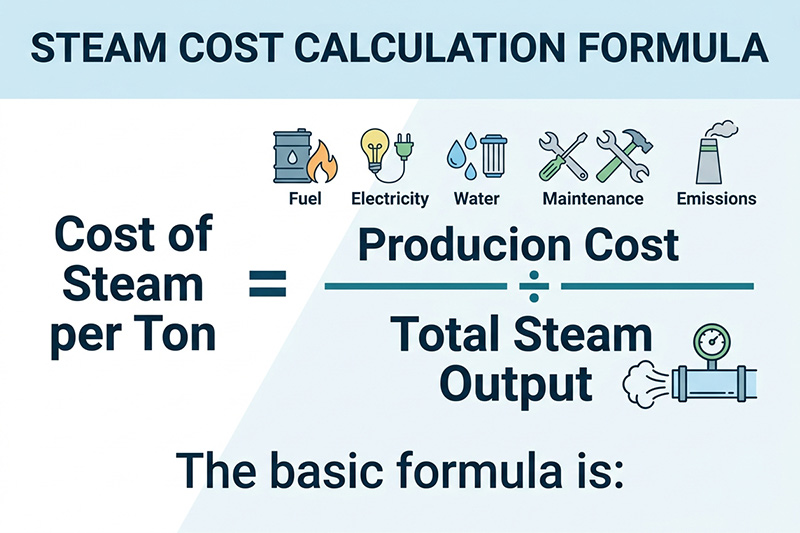
Steam Cost Calculation Formula
Die Grundformel lautet:
Cost of Steam per Ton = Total Steam Production Cost ÷ Total Steam Output
A simplified calculation:
Steam Cost = Fuel Cost + Electricity Cost + Water Cost + Maintenance Cost ÷ Steam Production (Tonne)
Für die meisten Fabriken, the first step is calculating fuel consumption because fuel normally contributes the largest percentage of steam production cost.
Beispiel: Calculate the Cost of 1 Ton of Steam from a Gas Boiler
Assume a factory uses:
- 6 ton/hour natural gas steam boiler
- Kesseleffizienz: 95%
- Erdgasverbrauch: 420 Nm³/h
- Erdgaspreis: USD 0.50/Nm³
- Operating time: 16 hours/day
Schritt 1: Calculate Hourly Fuel Cost
Formel:
Fuel Cost = Gas Consumption × Gas Price
Berechnung:
420 Nm³/h × $0.50 = $210/hour
The boiler fuel cost is:
USD 210 pro Stunde
Schritt 2: Calculate Steam Production
A 6 Tonne Dampfkessel produziert:
6 tons/hour steam
Schritt 3: Calculate Fuel Cost per Ton of Steam
Formel:
Steam Fuel Cost = Hourly Fuel Cost ÷ Steam Output
Berechnung:
$210 ÷ 6 tons = $35/ton steam
daher:
A 6 ton gas steam boiler may produce steam at approximately:
USD 35 pro Tonne Dampf
(before adding electricity, water treatment and maintenance costs).
Steam Production Cost by Different Fuel Types
Different fuels have different prices, heating values and combustion efficiencies.
| Kraftstofftyp | Advantage | Typische Anwendung |
|---|---|---|
| Erdgas | Hohe Effizienz, saubere Verbrennung | Essen, Textil-, chemische Industrie |
| Dieselöl | Easy availability | Remote areas |
| Schweröl | Lower fuel price in some regions | Large industrial plants |
| Biomasse | Low-cost renewable fuel | Agriculture and processing industries |
| Kohle | Low fuel price | Large-scale industries |
The cheapest fuel is not always the lowest steam cost.
Zum Beispiel:
A biomass boiler may use more fuel by weight because biomass has lower calorific value, but the total steam cost can still be competitive when local biomass fuel prices are low.
How Boiler Efficiency Affects Steam Cost
Boiler efficiency has a direct impact on the cost of steam.
Beispiel:
Two boilers produce the same amount of steam:
Boiler A
Effizienz:
85%
Boiler B
Effizienz:
95%
Boiler A requires more fuel because more energy is lost through:
- Exhaust gas
- Radiation loss
- Incomplete combustion
A high-efficiency boiler system can reduce fuel consumption significantly.
Energy-saving technologies include:
- Condensing gas boiler technology
- Kesselsparer
- Efficient burner system
- Automatic combustion control
Zum Beispiel, a boiler economizer can recover heat from exhaust gas and preheat feed water, improving overall boiler efficiency by approximately 3–8% depending on system conditions.
How to Reduce the Cost of Steam Production?
Factories can reduce steam costs through several methods.
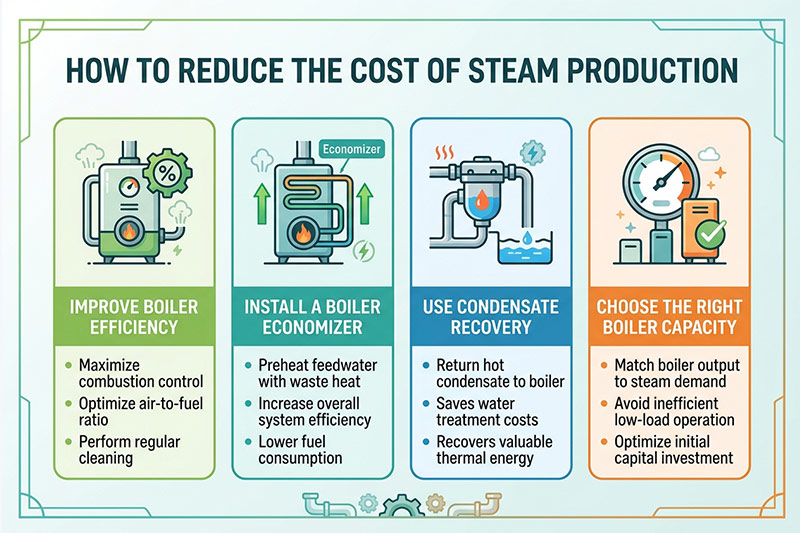
1. Verbessern Sie die Kesseleffizienz
Regular maintenance includes:
- Brennereinstellung
- Reinigung von Wärmeübertragungsflächen
- Checking air-fuel ratio
- Monitoring exhaust temperature
2. Installieren Sie einen Kessel-Economizer
A boiler economizer recovers waste heat from flue gas.
Vorteile:
- Geringerer Kraftstoffverbrauch
- Höhere thermische Effizienz
- Reduzierte Abgastemperatur
This is one of the most cost-effective upgrades for existing industrial boilers.
3. Use Condensate Recovery
Returning hot condensate reduces:
- Fresh water consumption
- Water treatment cost
- Fuel requirement
Because returned condensate already contains heat energy, it reduces the energy required to produce new steam.
4. Choose the Right Boiler Capacity
Oversized boilers often operate at low load, reducing efficiency.
A correctly sized boiler:
- Improves combustion performance
- Reduces fuel waste
- Provides stable steam supply
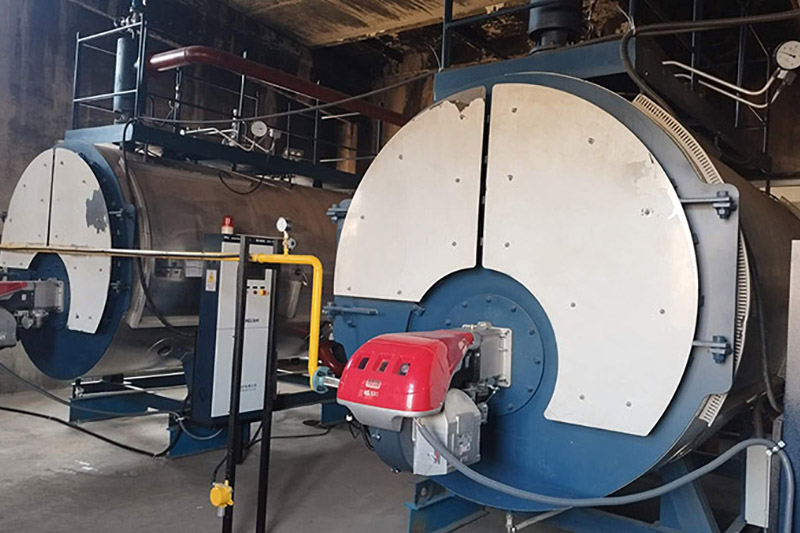
Industrial Steam Cost Example: Annual Saving Opportunity
Consider a factory operating:
- 6 Tonnendampfkessel
- 16 hours/day
- 300 days/year
Annual steam production:
6 × 16 × 300 = 28,800 tons/year
If an energy-saving upgrade reduces steam cost by:
$3 pro Tonne
Annual saving:
28,800 × $3 = $86,400/year
This is why many factories invest in:
- Ökonomen
- Condensing boilers
- Steam recovery systems
because small efficiency improvements can create significant annual savings.
Dabonn Energy Industrial Steam Boiler Solutions
Dabonn Energy provides complete industrial boiler solutions for factories worldwide.
Zu unseren Produkten gehören:
- Industrielle Dampfkessel
- Gasbefeuerte Dampfkessel
- Ölbefeuerte Kessel
- Biomassekessel
- Condensing gas boilers
- Kesselsparer
- Speisewasserpumpen
- Komplette Dampfsysteme
Instead of only supplying boiler equipment, Dabonn Energy evaluates:
- Dampfbedarf
- Kraftstoffverfügbarkeit
- Betriebsbedingungen
- Energy-saving opportunities
to design a more economical steam production system.
With optimized boiler selection and energy-saving technology, customers can reduce fuel consumption and achieve lower steam production costs.

Abschluss
The cost of producing 1 ton of steam depends on many factors, including fuel price, Kesseleffizienz, Dampfdruck, water treatment and operating conditions.
A simple calculation method is:
Total operating cost ÷ Total steam production = Cost per ton of steam
For industrial factories, reducing steam cost is not only about choosing cheaper fuel. Improving boiler efficiency, recovering waste heat and optimizing the complete steam system often provide greater long-term savings.
Accurate steam cost calculation helps companies make better decisions when selecting boilers, upgrading equipment and improving production efficiency.
FAQ
How much does 1 ton of steam cost?
The cost of producing 1 ton of steam is commonly around USD 20–60, depending on fuel price, boiler efficiency and operating conditions.
What is the formula for steam cost calculation?
Die Grundformel lautet:
Steam Cost per Ton = Total Steam Production Cost ÷ Steam Output
What is the biggest factor affecting steam cost?
Fuel consumption is usually the largest cost factor because fuel provides the energy required to generate steam.
Does boiler efficiency affect steam production cost?
Ja. Higher boiler efficiency means less fuel is required to produce the same amount of steam.
How can factories reduce steam costs?
Factories can reduce steam costs by improving boiler efficiency, Installation von Economizern, recovering condensate and optimizing boiler operation.
Which boiler fuel produces the cheapest steam?
Der günstigste Kraftstoff hängt von den örtlichen Energiepreisen ab. Biomass may be economical in areas with available biomass resources, while natural gas usually provides high efficiency and stable operation.
Is a condensing gas boiler cheaper to operate?
A condensing gas boiler can reduce operating costs by recovering additional heat from exhaust gases, especially in applications with suitable return water temperatures.
How do I calculate my factory’s steam cost?
You need the following information:
- Boiler fuel consumption
- Kraftstoffpreis
- Dampfausstoß
- Kesseleffizienz
- Betriebsstunden
Then calculate total cost divided by total steam production.


