
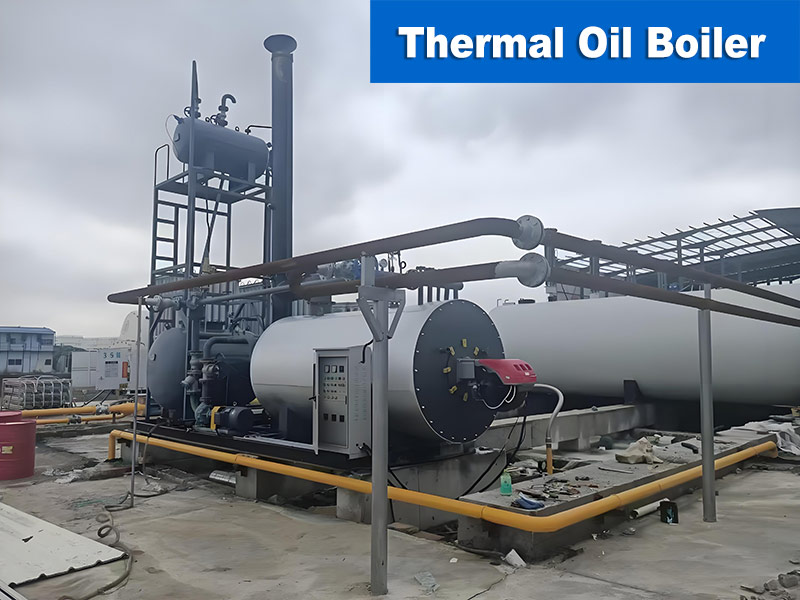
What Is a Thermal Oil Boiler?
A thermal oil boiler (also known as a hot oil boiler or thermal fluid heater) is an industrial heating system that uses thermal oil instead of water or steam as the heat transfer medium.
Unlike traditional steam boilers, it can deliver high temperatures up to 300°C or more under low pressure, making it safer and more efficient for industrial applications.
Thermal Oil Boiler Working Principle
The working principle of a thermal oil boiler is based on a closed-loop heat transfer system:
- Fuel is burned in the combustion chamber
- Heat is transferred to the thermal oil inside the coil
- The heated oil circulates through the system via a pump
- Heat is delivered to industrial equipment
- The cooled oil returns to the boiler for reheating
This system ensures stable temperature control and minimal heat loss.
Key Advantages of Thermal Oil Boilers
- High temperature at low pressure – safer than steam systems
- Higher efficiency – no latent heat loss
- Precise temperature control – ideal for industrial processes
- Low maintenance – no scaling or water treatment
- Fuel flexibility – gas, oil, or biomass
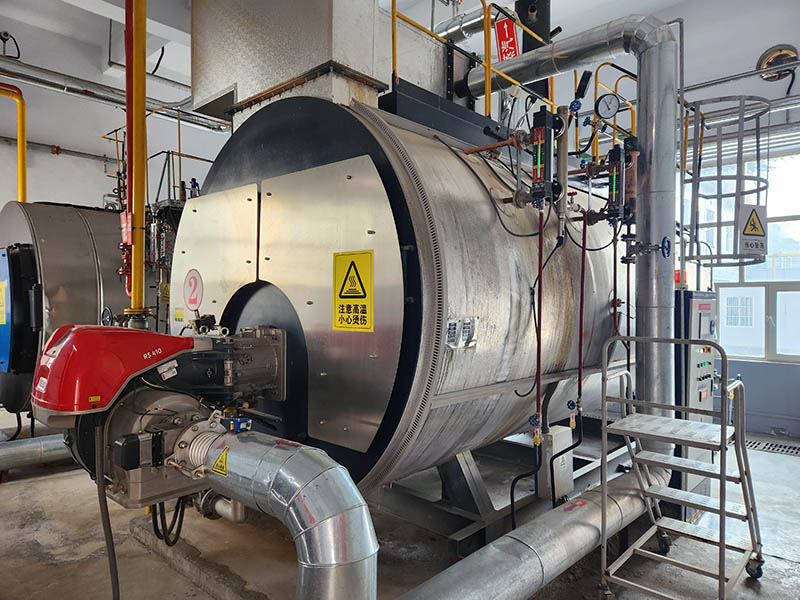
Thermal Oil Boiler vs Steam Boiler
| Feature | Thermal Oil Boiler | Steam Boiler |
|---|---|---|
| Working Pressure | Low | High |
| Max Temperature | Up to 300°C+ | Limited by pressure |
| Efficiency | Higher | Lower |
| Maintenance | Low | High |
| Safety | Higher | Lower |
Industrial Applications of Thermal Oil Boilers
- Chemical industry (reactor heating)
- Textile industry (dyeing and finishing)
- Food processing (oil refining, baking)
- Asphalt and road construction
- Wood and panel production
Thermal Oil Boiler Cost Analysis
The cost of a thermal oil boiler varies significantly depending on project requirements, configuration, and industry application. Understanding the cost structure helps buyers make more informed decisions.
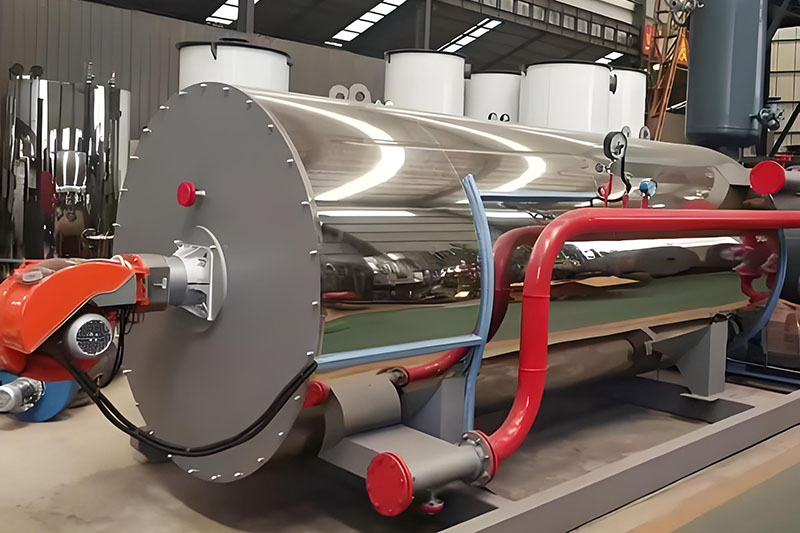
Main Factors Affecting Cost
- Capacity (kW / kcal/h): Larger systems require more materials and higher-grade components, significantly increasing the price.
- Fuel Type: Gas-fired systems are typically cleaner but may require additional burner systems, while biomass boilers involve feeding systems and storage, increasing overall investment.
- Automation Level: Fully automatic PLC control systems, remote monitoring, and safety protection features will increase initial cost but reduce labor and operational risks.
- System Configuration: Complete systems including pumps, expansion tanks, heat exchangers, and pipelines cost more than boiler-only solutions.
- Material & Design: High-quality steel, advanced heat transfer structures, and customized designs for specific industries (such as asphalt or chemical plants) also impact pricing.
Estimated Price Range
- Small Capacity (100kW – 700kW): $5,000 – $20,000
Suitable for small factories, food processing, and light industrial use. - Medium Capacity (700kW – 3000kW): $20,000 – $80,000
Commonly used in textile, chemical, and medium-scale production lines. - Large Capacity (3000kW+): $80,000+
Designed for heavy industries such as asphalt plants, large chemical factories, and continuous production systems.
Additional Costs to Consider
- Installation and commissioning
- Thermal oil (initial filling)
- Pipeline and insulation system
- Fuel supply system (especially for biomass)
- Maintenance and spare parts
Important: While the initial investment of a thermal oil boiler may be higher than some traditional systems, it offers lower long-term operating costs due to higher efficiency, reduced maintenance, and no need for water treatment.
For most industrial users, the return on investment (ROI) is typically achieved within 1–3 years, depending on usage and fuel savings.
Looking for the best boiler solution for your factory?
Looking for a Steam Boiler?
Contact us today for a customized steam boiler solution and free energy efficiency assessment. Our expert engineering team provides full support from design to installation.
Why Choose Dabonn Energy?
Dabonn Energy provides high-efficiency thermal oil boiler systems for industrial applications worldwide.
- Advanced heat transfer technology
- Stable and precise temperature control
- Custom solutions for industries
- Support for gas, oil, and biomass fuels
FAQs
Is a thermal oil boiler safer than a steam boiler?
Yes, because it operates under low pressure, reducing explosion risks.
What temperature can a thermal oil boiler reach?
Typically up to 300°C–350°C depending on the system.
Does it require water treatment?
No, which reduces maintenance and operating costs.


