
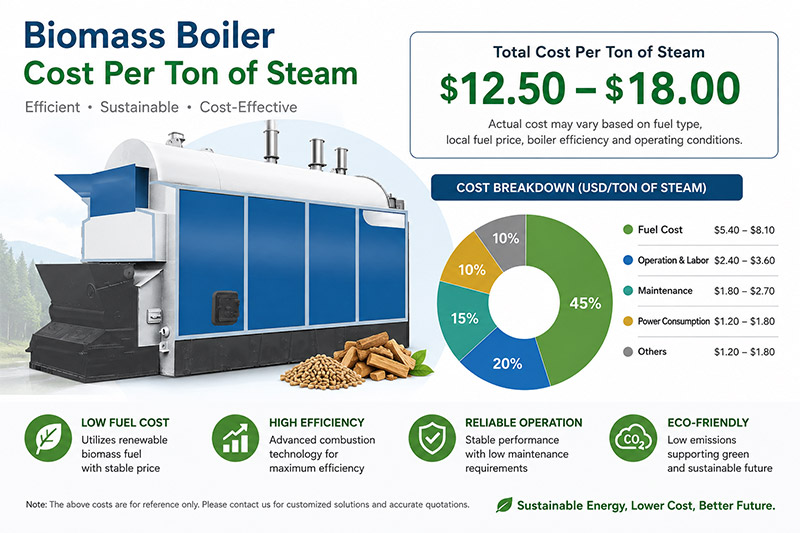
O custo da caldeira de biomassa por tonelada de vapor é um dos indicadores mais importantes para as fábricas compararem opções de combustível. Em vez de olhar apenas para o preço de compra de uma caldeira de biomassa, compradores industriais precisam calcular quanto combustível, eletricidade, tratamento de água, trabalho, manutenção, e o manuseio de cinzas são necessários para produzir uma tonelada de vapor utilizável.
Para fábricas com acesso estável a combustível de biomassa de baixo custo, uma caldeira a vapor de biomassa muitas vezes pode produzir vapor a um custo menor do que uma caldeira a gás ou a óleo. No entanto, o custo real por tonelada de vapor depende muito do tipo de combustível, umidade do combustível, eficiência da caldeira, horário de funcionamento, custo de mão de obra local, e o nível de automação nos sistemas de caldeiras industriais.
O que significa o custo da caldeira de biomassa por tonelada de vapor?
O custo da caldeira de biomassa por tonelada de vapor significa a despesa operacional total necessária para gerar uma tonelada métrica de vapor. É uma medição prática em nível de fábrica porque conecta diretamente o desempenho da caldeira com o custo de produção.
O cálculo deve incluir mais do que combustível de biomassa. Uma análise completa dos custos operacionais da caldeira normalmente inclui combustível, eletricidade, produtos químicos para tratamento de água, trabalho, manutenção de rotina, remoção de cinzas, e operação de controle de emissões.
| Item de custo | Por que é importante |
|---|---|
| Combustível de biomassa | Geralmente a maior despesa operacional |
| Eletricidade | Usado por fãs, bombas, transportadores, e equipamento de alimentação de combustível |
| Tratamento de Água | Ajuda a proteger os tubos da caldeira e a manter a qualidade do vapor |
| Trabalho | Depende do nível de automação da caldeira de biomassa |
| Manutenção | Inclui grelha, sistema de alimentação, sistema de cinzas, e trabalho de inspeção |
| Manuseio de Cinzas | Inclui coleta de cinzas, armazenar, transporte, e descarte |
| Controle de Emissões | Pode incluir equipamentos de coleta de poeira e tratamento de gases de combustão |
Quanto combustível de biomassa é necessário para produzir uma tonelada de vapor?
Uma estimativa prática começa com a demanda de energia de vapor. A produção de uma tonelada de vapor industrial normalmente requer cerca de 650,000 para 750,000 kcal de calor útil, dependendo da temperatura da água de alimentação, pressão de vapor, taxa de purga, e recuperação de condensado.
Se uma caldeira de biomassa funcionar a aproximadamente 80% para 86% eficiência térmica, a necessidade de combustível muda de acordo com o poder calorífico do combustível de biomassa. Pellets de madeira seca requerem menos combustível por tonelada de vapor do que lascas de madeira úmida porque os pellets contêm mais energia utilizável por quilograma.
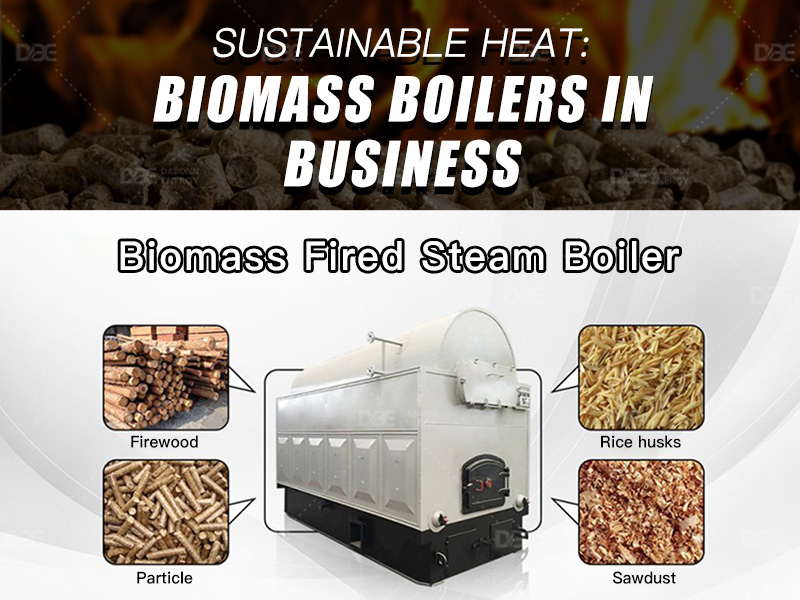
| Combustível de biomassa | Valor de aquecimento típico | Combustível estimado necessário por tonelada de vapor | Dificuldade de manuseio de combustível |
|---|---|---|---|
| Pelotas de madeira | 4,000-4,500 kcal/kg | 190-230 kg | Baixo |
| Lascas de madeira seca | 3,000-3,800 kcal/kg | 230-300 kg | Médio |
| Serragem | 3,200-4,000 kcal/kg | 220-290 kg | Médio |
| Casca de Arroz | 2,800-3,300 kcal/kg | 270-340 kg | Médio |
| Casca de Coco | 3,800-4,500 kcal/kg | 190-240 kg | Médio |
| Casca de palmiste | 3,800-4,600 kcal/kg | 185-235 kg | Médio |
| Resíduos Agrícolas com Alta Umidade | 1,800-2,800 kcal/kg | 320-500 kg | Alto |
Estes números são estimativas de planejamento e não garantias fixas. Um projeto real deve confirmar a umidade do combustível, valor calorífico, conteúdo de cinzas, pressão de vapor, e eficiência operacional esperada antes de finalizar a seleção de uma caldeira de biomassa.
Custo da caldeira de biomassa por tonelada de vapor: Exemplo de cálculo
Suponha que uma fábrica utilize aparas de madeira seca com um poder calorífico de 3,500 kcal/kg. Se a caldeira precisar 260 kg de cavacos de madeira para gerar uma tonelada de vapor e o preço local dos cavacos de madeira é $80 por tonelada, o custo do combustível pode ser calculado da seguinte forma.
| Item de cálculo | Valor de exemplo |
|---|---|
| Consumo de cavacos de madeira | 260 kg por tonelada de vapor |
| Preço das aparas de madeira | $80 por tonelada |
| Custo de combustível por tonelada de vapor | $20.80 |
| Eletricidade, Tratamento de Água, Trabalho, Manutenção e Manuseio de Cinzas | $6-$15 por tonelada de vapor |
| Custo total estimado de vapor de biomassa | $27-$36 por tonelada de vapor |
Neste exemplo, o custo total da caldeira de biomassa por tonelada de vapor é aproximadamente $27 para $36. O resultado exato variará de acordo com o preço do combustível, projeto de caldeira, nível de automação, e condições operacionais locais.
Caldeira de biomassa versus custo de caldeira a gás por tonelada de vapor
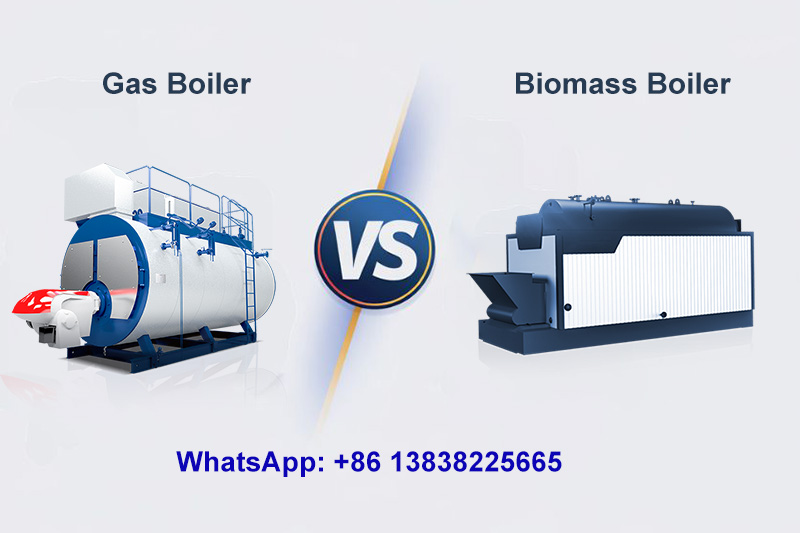
Muitas fábricas comparam uma caldeira de biomassa com uma caldeira a vapor a gás. Caldeiras a gás são mais limpas, mais fácil de automatizar, e requerem menos espaço de armazenamento de combustível. Caldeiras de biomassa geralmente requerem mais espaço no local e mais manuseio de combustível, mas podem reduzir significativamente o custo do vapor quando há combustível de baixo custo disponível.
| Item de comparação | Caldeira a Vapor de Biomassa | Caldeira a vapor a gás |
|---|---|---|
| Custo de combustível por tonelada de vapor | Muitas vezes menor onde a biomassa está disponível localmente | Depende muito do preço do gás natural |
| Armazenamento de Combustível | Requer pátio de armazenamento ou silo | Geralmente não é necessário grande armazenamento no local |
| Automação | Médio a alto, dependendo do sistema de alimentação | Alto |
| Requisito de mão de obra | Geralmente mais alto | Geralmente mais baixo |
| Controle de Emissões | É necessário gerenciamento de poeira e cinzas | Menores emissões de partículas |
| Melhor Aplicação | Fábricas com fornecimento de biomassa barato e estável | Fábricas com fornecimento de gás confiável e com preços competitivos |
O cálculo do consumo de combustível de uma caldeira a gás por hora é útil ao comparar os dois sistemas. A melhor opção não é determinada apenas pelo preço do combustível. Deve também considerar a logística de combustível, disponibilidade de mão de obra, requisitos de emissões, capacidade de manutenção, e demanda anual de vapor.
Caldeira de biomassa vs caldeira a óleo Custo por tonelada de vapor
Comparado com uma caldeira a óleo, a biomassa pode proporcionar poupanças substanciais de combustível em regiões onde os preços do gasóleo ou do petróleo pesado são elevados. No entanto, caldeiras a óleo são muitas vezes mais fáceis de instalar em locais com espaço limitado e fornecimento limitado de biomassa.
| Fator | Caldeira de Biomassa | Caldeira a óleo |
|---|---|---|
| Estabilidade do preço do combustível | Depende do abastecimento local agrícola ou de resíduos de madeira | Depende dos mercados internacionais de petróleo |
| Custo de combustível por tonelada de vapor | Potencialmente baixo | Frequentemente mais elevada nos mercados importadores de petróleo |
| Espaço de instalação | Grande devido ao manuseio de combustível e cinzas | Menor, mas requer área do tanque de óleo |
| Operação Diária | Requer gerenciamento de combustível | Mais automatizado e compacto |
| Melhor caso de uso | Alta demanda anual de vapor com biomassa local | Projetos remotos sem gasodutos |
Quais fatores aumentam o custo do vapor de biomassa?
Uma caldeira de biomassa pode parecer económica no papel, mas tornar-se cara se o combustível e as condições de funcionamento forem mal controlados.. Os seguintes fatores têm maior impacto no custo final por tonelada de vapor.
- Alta umidade do combustível: O combustível úmido consome mais energia para evaporar a água antes que o calor útil seja produzido.
- Baixa eficiência da caldeira: Má combustão, excesso de ar, perda de calor, e superfícies sujas de transferência de calor aumentam o uso de combustível.
- Tamanho de combustível instável: Tamanhos de partículas mistos podem causar problemas de alimentação e combustão incompleta.
- Alto teor de cinzas: Mais cinzas aumentam o tempo de limpeza, custo de descarte, e demanda de manutenção.
- Baixa recuperação de condensado: A água de alimentação fria aumenta o calor necessário para produzir vapor.
- Operação frequente com baixa carga: As caldeiras geralmente operam com mais eficiência perto da faixa de carga projetada.
- Manuseio manual de combustível: Os custos de mão de obra podem aumentar rapidamente quando o sistema não possui alimentação automatizada e remoção de cinzas.
Procurando uma caldeira a vapor de biomassa?
Contate-nos hoje para uma solução personalizada de caldeira a vapor de biomassa e avaliação gratuita de eficiência energética. Nossa equipe de engenharia especializada fornece suporte completo desde o projeto até a instalação.
Como reduzir o custo da caldeira de biomassa por tonelada de vapor
A estratégia de redução de custos mais eficaz não é simplesmente comprar combustível mais barato. Uma fábrica deve melhorar a eficiência do sistema de vapor total, desde o armazenamento de combustível até o retorno do condensado.
| Medida de Melhoria | Benefício esperado |
|---|---|
| Use combustível de biomassa mais seco | Reduz o consumo de combustível e melhora a estabilidade da combustão |
| Instale alimentação automática de combustível | Reduz a demanda de mão de obra e melhora a consistência do disparo |
| Melhorar o isolamento da tubulação de vapor | Reduz a perda de calor depois que o vapor sai da caldeira |
| Recuperar condensado quente | Reduz a demanda de aquecimento de água de alimentação |
| Use equipamento adequado para tratamento de água | Ajuda a prevenir incrustações e protege a eficiência da transferência de calor |
| Manter equipamentos de combustão | Melhora o equilíbrio ar-combustível e reduz a perda de combustível não queimado |
| Selecione a capacidade correta da caldeira | Evita operação ineficiente causada por superdimensionamento ou subdimensionamento |
Período de retorno da caldeira de biomassa
Uma caldeira de biomassa muitas vezes custa mais para instalar do que uma caldeira convencional a gás ou óleo porque pode exigir um sistema de armazenamento de combustível, transportador, equipamento de alimentação, sistema de remoção de cinzas, coletor de pó, e uma casa de caldeira maior. O investimento ainda pode ser justificado se as poupanças anuais de combustível forem significativas.
Um cálculo simples de retorno é:
Período de retorno = Investimento adicional no projeto de biomassa ÷ Economia anual no custo de combustível
Por exemplo, se um projeto de biomassa custar $150,000 mais do que um projeto de caldeira a gás, mas economiza $60,000 por ano em custos de combustível, o período de retorno simples é cerca de 2.5 anos. O retorno real também deve incluir manutenção, trabalho, financiamento, risco do preço do combustível, e paralisação da produção.
Quais indústrias se beneficiam mais com o vapor de biomassa de baixo custo?
As caldeiras de biomassa são mais competitivas em indústrias com demanda contínua de vapor e fácil acesso ao combustível de biomassa. Eles são especialmente adequados para fábricas que podem usar seus próprios resíduos de produção como combustível.
| Indústria | Uso típico do Steam | Combustível potencial de biomassa |
|---|---|---|
| Planta de processamento de alimentos | Culinária, esterilização, limpeza, secagem | Casca de arroz, casca de coco, lascas de madeira |
| Fabricação Têxtil | Tingimento, lavar, secagem, passar | Lascas de madeira, pelotas, resíduos agrícolas |
| Moinho de óleo de palma | Aquecimento de processo e suporte de energia | Fibra, concha, cachos de frutas vazios |
| Fábrica de processamento de madeira | Secagem e aquecimento de processo | Serragem, latido, sobras de madeira |
| Fábrica de papel | Secagem e geração de vapor | Resíduos de madeira e resíduos de biomassa |
| Planta de processamento agrícola | Secagem, aquecimento, e esterilização | Resíduos de culturas e biomassa local |
Como a Dabonn Energy avalia projetos de caldeiras de biomassa
Energia Dabonn não recomenda uma caldeira de biomassa apenas porque o combustível de biomassa parece barato. Uma avaliação prática do projeto começa com a fonte real de combustível do cliente, umidade do combustível, pressão de vapor, horário de funcionamento diário, layout do site, condições de trabalho, requisitos de emissões, e plano de produção futuro.
Para clientes que consideram uma caldeira de biomassa, Dabonn Energy pode ajudar a comparar biomassa, gás, óleo, e opções elétricas como parte de um plano completo de soluções de aquecimento industrial. O objetivo é identificar o menor custo prático do ciclo de vida, em vez de simplesmente citar o preço mais baixo do equipamento..
Conclusão
O custo da caldeira de biomassa por tonelada de vapor pode ser altamente competitivo quando uma fábrica tem acesso a recursos estáveis., seco, e combustível de biomassa acessível. Em muitos projetos, o custo operacional total pode estar dentro de uma faixa inferior à geração de vapor a gás ou óleo, mas o resultado final depende da qualidade do combustível, eficiência da caldeira, automação, trabalho, manuseio de cinzas, e projeto do sistema de vapor.
Antes de escolher uma caldeira a vapor de biomassa, as fábricas devem calcular o consumo de combustível por tonelada de vapor, incluir todas as despesas operacionais, e compare o custo do ciclo de vida completo com uma caldeira a vapor a gás, caldeira a óleo, ou caldeira a vapor elétrica. Um sistema de biomassa devidamente concebido pode reduzir as despesas energéticas a longo prazo, ao mesmo tempo que apoia uma produção industrial mais resiliente.
Perguntas frequentes
Quanto custa uma caldeira de biomassa por tonelada de vapor?
O custo total pode variar amplamente de acordo com o preço do combustível e as condições de operação. Em um exemplo típico de cavacos de madeira, o vapor de biomassa pode custar aproximadamente $27 para $36 por tonelada de vapor, incluindo combustível e despesas operacionais comuns. O preço local do combustível e o teor de umidade podem alterar este resultado significativamente.
Quanto combustível de biomassa é necessário para uma tonelada de vapor?
A maioria das caldeiras de biomassa requer aproximadamente 190 para 340 kg de combustível de biomassa seca a moderadamente seca por tonelada de vapor. Os resíduos agrícolas húmidos podem exigir mais do que 320 kg por tonelada de vapor devido ao seu menor poder calorífico utilizável.
Uma caldeira de biomassa é mais barata de operar do que uma caldeira a gás?
Pode ser mais barato quando o combustível de biomassa local é barato e está disponível durante todo o ano. Caldeiras a gás ainda podem ser mais adequadas onde a mão de obra é cara, o espaço é limitado, ou o armazenamento de biomassa e o controle de emissões são difíceis.
Qual é o maior fator de custo em uma caldeira de biomassa?
O custo e a qualidade do combustível são geralmente os maiores fatores. Alto teor de umidade, tamanho de combustível instável, e o alto teor de cinzas pode aumentar o consumo de biomassa e os custos de manutenção.
Como uma fábrica pode reduzir o custo do vapor de biomassa?
As fábricas podem reduzir custos usando combustível mais seco, melhorando a eficiência da caldeira, automatizando a alimentação de combustível, recuperação de condensado, manutenção de equipamentos de tratamento de água, e selecionando a capacidade correta da caldeira.


