
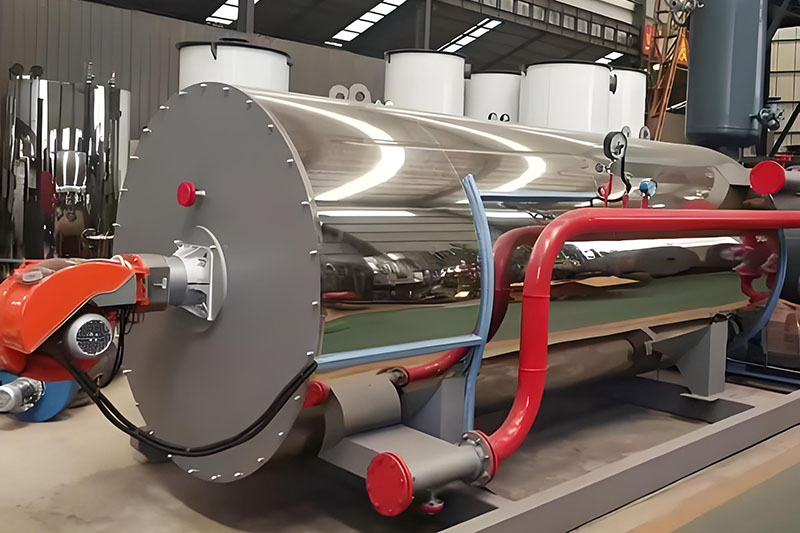
1. Що таке термомасляний котел? — Working Principle and System Structure
1.1 Definition of a Thermal Oil Boiler
А термічний котел (also known as a hot oil heater or organic heat carrier boiler) is a heat energy system. It uses thermal oil (synthetic or mineral oil) as the heat transfer medium and delivers heat through forced liquid-phase circulation via a pump.
1.2 Принцип роботи
- Fuel is burned in the combustion chamber to generate heat;
- Thermal oil inside coils or tubes absorbs the heat;
- The heated oil is circulated through a closed pipeline by a circulation pump;
- High-temperature oil transfers sensible heat to end-use equipment (no phase change occurs);
- Охолоджене масло повертається в котел для підігріву, forming a closed-loop system.
Key Feature:
Thermal oil remains in liquid phase throughout the process, with a temperature difference between supply and return typically only 20–30°C.
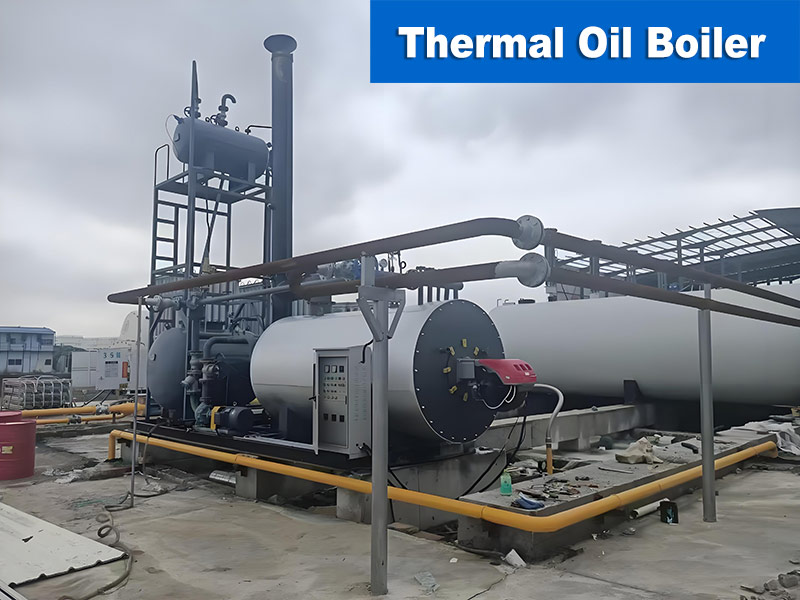
1.3 Common Fuel Types and Structures
- By fuel type: gas-fired, oil-fired, coal-fired, electric thermal oil boilers;
- By structure: вертикальний (YQL series), horizontal (YQW series);
- Capacity is usually expressed in MW or kcal/h.
1.4 Типові програми
Widely used in:
- Petrochemical
- Textile and dyeing
- Plastics and rubber
- Обробка харчових продуктів
- Wood processing
- Asphalt heating
- Coating and curing
- Foundry sand drying
Suitable for processes requiring temperatures up to ≤350°C
2. Що таке паровий котел? — Working Principle and System Structure
2.1 Definition of a Steam Boiler
А паровий котел is a pressure vessel that converts water into steam through fuel combustion or electric heating, providing thermal energy for industrial production and power generation.
2.2 Принцип роботи
- Heat generated from fuel combustion heats water inside the boiler;
- Water boils and turns into saturated or superheated steam;
- Steam is transported to end-use equipment and releases heat during condensation;
- Condensate returns to the boiler, is treated, and reheated, completing the cycle.
Key Feature:
The heat transfer process involves phase change (liquid → vapor → liquid), releasing latent heat with high energy density.
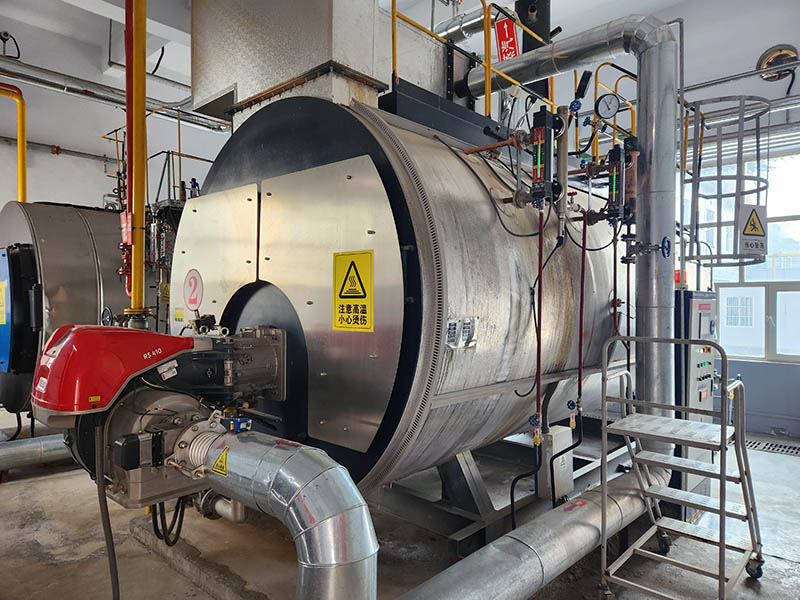
2.3 Common Types
- By structure: fire-tube boilers, water-tube boilers;
- By fuel: газ, масло, вугілля, біомаса, електричні парові котли;
- Capacity is typically expressed in тонна/год (т/год).
2.4 Типові програми
Widely used in:
- Обробка харчових продуктів
- Textile and dyeing
- Хіміко-фармацевтична промисловість
- Виробництво паперу
- Генерація електроенергії
- Hospitals and sterilization systems
3. Ключові відмінності: Термомасляний котел проти парового котла
3.1 Heat Transfer Medium Comparison
| Параметр | Термомасляний котел | Паровий котел |
|---|---|---|
| Heat Medium | Термоолія | вода |
| Phase Change | немає (always liquid) | так (water → steam → water) |
| Heat Type | Sensible heat | Latent + sensible heat |
3.2 Temperature and Pressure Characteristics
| Параметр | Термомасляний котел | Паровий котел |
|---|---|---|
| Working Temperature | Up to 350–400°C | Depends on pressure |
| Робочий тиск | Низький (0.3–0.8 MPa, high temp at low pressure) | Високий (≈10 MPa for 300°C steam) |
| Контроль температури | ±1–3°C precision | Less flexible |
3.3 Thermal Efficiency Comparison
- Thermal oil boilers typically achieve about 85% ефективність, but without phase change loss or condensate recovery issues, their real-world performance is often superior;
- Steam boilers can reach 95% combustion efficiency, but suffer from blowdown loss, condensate loss, and radiation loss;
Under the same operating conditions, thermal oil systems can save over 25% energy, and up to 50% when condensate recovery is difficult.
3.4 Порівняння безпеки
| Фактор | Термомасляний котел | Паровий котел |
|---|---|---|
| Main Risk | Oil leakage and fire hazard | High-pressure explosion |
| Safety Advantage | Low-pressure operation | Mature standards |
Примітка:
Thermal oil systems require leak prevention and oil monitoring; steam systems require strict water quality and pressure inspections.
Шукаєте найкраще рішення котла для вашого заводу?
Шукаю паровий котел?
Зв'яжіться з нами сьогодні для індивідуального парового котла та безкоштовної оцінки енергоефективності. Наша експертна команда інженерів надає повну підтримку від проектування до встановлення.
3.5 Maintenance and Operating Cost
| Фактор | Термомасляний котел | Паровий котел |
|---|---|---|
| Maintenance Frequency | Низький | Високий |
| Maintenance Content | Oil replacement (every 5–10 years) | Очищення води, очищення, trap maintenance |
| Water Consumption | Жодного | Високий |
| Annual Maintenance Cost | 5–8% of equipment cost | 10–15% |
3.6 Advantages and Disadvantages
Thermal Oil Boiler – Advantages
- Висока температура при низькому тиску
- Точний контроль температури (±1°C)
- No water treatment required
- Closed system with minimal heat loss
Thermal Oil Boiler – Disadvantages
- Thermal oil replacement cost
- Oil degradation at high temperature
- Fire risk due to leakage
- Higher flue gas temperature
Steam Boiler – Advantages
- High energy density
- Зріла технологія
- Suitable for direct steam applications
- Сильна адаптивність до палива
Steam Boiler – Disadvantages
- High temperature requires high pressure
- Complex operation (water treatment required)
- Condensate system increases maintenance difficulty
- Larger footprint
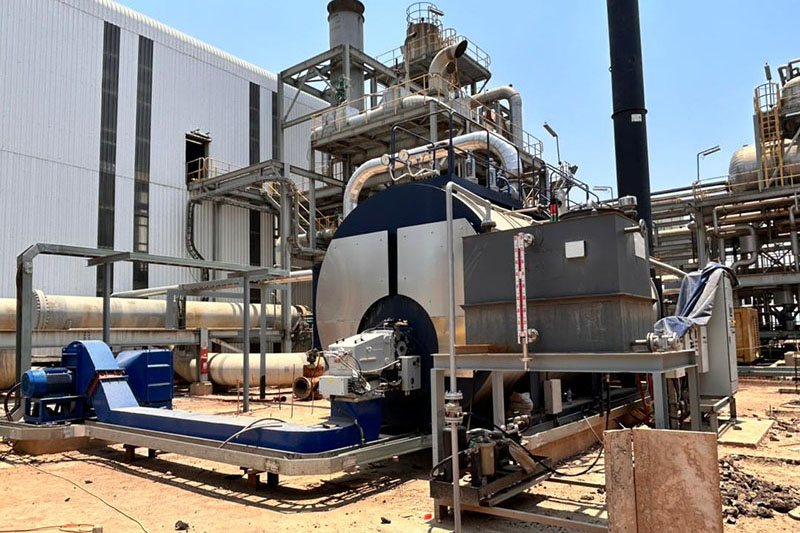
4. Application Comparison: Which Industry Should Choose Which?
4.1 Suitable for Thermal Oil Boilers
- Хімічна промисловість (reactors, дистиляція, polymerization)
- Textile finishing (stenters, сушарки)
- Plastics and rubber processing
- Asphalt heating
- Wood processing
- Food frying and baking
- Coating and curing processes
Best for processes requiring >180°C
4.2 Suitable for Steam Boilers
- Обробка харчових продуктів (стерилізація, приготування їжі)
- Pharmaceutical sterilization (134°C steam)
- Генерація електроенергії
- Textile humidification
- Паперова промисловість
- Лікарні
Best for processes requiring <180°C or direct steam
5. Керівництво по вибору: Як правильно вибрати котел
5.1 Five-Step Decision Framework
Крок 1: Temperature Requirement
- Below 180°C → Steam boiler
- Above 180°C → Thermal oil boiler
Крок 2: Heat Load Characteristics
- Continuous operation → Thermal oil boiler
- Intermittent / fast response → Steam boiler
Крок 3: Safety and Environmental Requirements
- Low-pressure high-temperature → Thermal oil
- Direct steam needed → Steam boiler
Крок 4: Lifecycle Cost
- Thermal oil → Lower long-term cost
- Steam → Higher maintenance and operation cost
Крок 5: System Compatibility
- Existing steam network?
- Future expansion?
- Capacity margin (10%)?
5.2 Common Mistakes
- Assuming high temperature requires high pressure
- Assuming steam is always cheaper
- Ignoring thermal oil degradation
- Thinking only one system can be used
In reality, both systems can be combined.
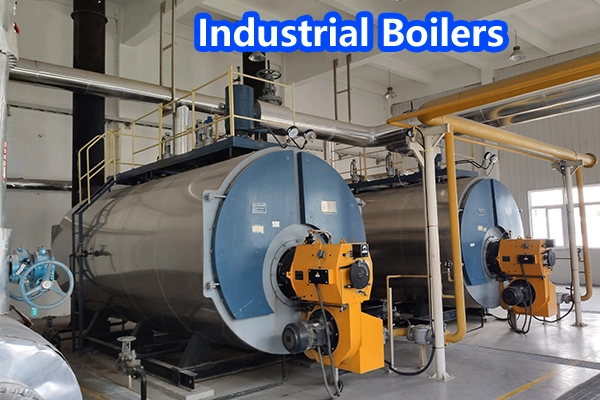
6. Can Thermal Oil Boilers and Steam Boilers Be Combined?
так. In certain applications:
- Thermal oil boiler provides high-temperature heat
- Heat exchangers generate steam
- Combined system efficiency can reach 90%+
Ideal for complex industrial processes requiring both heat types.
7. Висновок: Final Selection Recommendation
| Фактор | Choose Thermal Oil Boiler | Choose Steam Boiler |
|---|---|---|
| Temperature | >180°C | <180°C |
| Pressure Sensitivity | Високий | Acceptable |
| Steam Requirement | немає | так |
| Temperature Precision | Високий | Середній |
| Water Availability | Обмежений | Sufficient |
| Технічне обслуговування | простий | Dedicated team required |
| Budget | Обмежений | Вища |
| Operation Mode | Continuous | Intermittent |
Key Recommendations
- Choose термічний котел for high temperature (>200°C), точний контроль, low-pressure safety, and energy efficiency
- Choose паровий котел for low temperature (<180°C), direct steam use, and fast heat exchange
If unsure, consult a professional supplier with your process data (температура, heat demand, operation mode, умови палива).
8. поширені запитання
1. Is a thermal oil boiler more expensive than a steam boiler?
For the same capacity, thermal oil boilers are usually slightly lower in equipment cost, but total cost depends on operation and maintenance.
2. Яку температуру може досягати термомасляний котел?
До 350–400°C, depending on oil type and system design.
3. What temperature can a steam boiler reach?
Above 540°C, but requires very high pressure.
4. How often should thermal oil be replaced?
Typically every 5–10 years, depending on operating conditions.
5. Can both systems be used together?
так. Combined systems can reach 90%+ ефективність.
6. Which is safer, thermal oil boiler or steam boiler?
Thermal oil boilers operate at low pressure with lower explosion risk; steam boilers are mature systems with strict safety standards.
Get a Free Selection Solution
If you are still unsure whether to choose a thermal oil boiler or a steam boiler, feel free to contact us with your process details (температура, heat load, operation mode, тощо).
Click to inquire or call: +86 13838225665


